

























































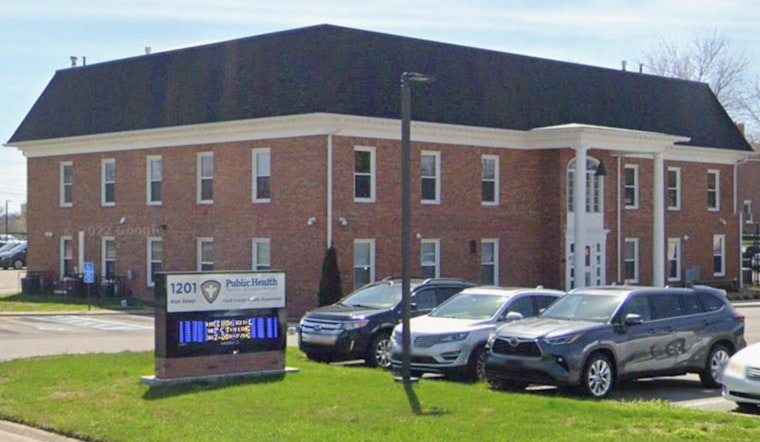
The Clark County Health Department's syringe exchange in Jeffersonville is scrambling to keep basic harm-reduction supplies in circulation after a federal policy shift this summer. Staff say they have turned to private donations and quietly assembled packaged kits so people who inject drugs still receive cookers, sterile water, and naloxone. Public-health leaders warn the workaround may not hold for long as Indiana's limited law authorizing exchanges is set to sunset next summer.
The changes trace back to an executive order signed July 24 that instructs federal agencies to prioritize treatment and other interventions over what the administration labeled "harm reduction." The White House order shifted federal priorities, and a July 29 "Dear Colleague" letter from SAMHSA spells out which supplies its grants may still support. The guidance allows naloxone, test strips, and sharps-disposal materials, but it bars the purchase of syringes, sterile water, and other paraphernalia with grant dollars. Local officials say that while naloxone remains federally fundable, much of the equipment programs relied on is now off limits.
At the Clark County health department, staff discovered boxes stamped "DO NOT USE" that held cookers and sterile water bought with state grants, and were told they could no longer hand out those supplies. To keep people stocked, employees have been buying items with private donations and packing them into "mystery bags" assembled by workers who are not paid with state or federal funds. Those workarounds, along with the program's role in connecting people to treatment, were detailed in reporting by the Associated Press.
Why officials say exchanges matter
Public-health authorities point to decades of research finding that syringe services programs reduce disease and save money. The CDC reports that SSPs are associated with an approximately 50% reduction in new HIV and hepatitis C infections. The 2015 Scott County outbreak in Austin, Ind., which sickened more than 200 people, is often held up as a case study in why rural prevention programs matter, according to reporting by WITF. Health leaders warn that shrinking services now risks reversing those hard-won gains.
Scope of the programs
Programs in Indiana and beyond say they provide thousands of connections to treatment and life-saving overdose reversal drugs every year. The Damien Center reports that its syringe services and outreach work have distributed hundreds of thousands of sterile syringes and thousands of naloxone doses at the sites it operates. Statewide, exchanges have made more than 27,000 referrals to drug treatment, and advocates say naloxone distributed through those networks is credited with nearly 25,000 reversals, according to the Associated Press.
Legal and funding outlook
Indiana's statute allowing syringe exchanges is set to expire on July 1, 2026, and local officials say that the combination of the law's sunset and the new federal guidance leaves programs with a fragile budget picture. State health leaders have told some local programs to comply with the federal direction and halt distribution of certain supplies, according to reporting by Louisville Public Media. The White House order also asks federal agencies to review whether recipients of federal housing or homelessness assistance that allow supervised consumption or distribution of paraphernalia could face legal or funding consequences, a provision that has only deepened programs' concern.
What comes next
For now, Clark County staff say they are leaning on private donations, volunteers, and local partners to keep services running, but program leaders caution that this patchwork is unlikely to cover a sustained rise in need. Advocacy groups and service providers are pressing lawmakers and mounting public campaigns to shore up funding and extend legal authority, while public-health officials keep stressing that prevention is far less costly than responding to outbreaks or treating chronic infections. The shape of funding in the coming legislative session, and whether state money is used to replace restricted federal grant purchases, will likely determine whether the Jeffersonville exchange survives beyond next summer.





