

























































Indigenous land protectors at Peehee Mu’huh, the place that appears as Thacker Pass on non-Indigenous maps, say they have been watched, followed and recorded for years as construction moves ahead on what is slated to be one of North America’s largest lithium mines. Activists and tribal leaders report that the scrutiny has followed ceremonies, prayer rides and camps on nearby public land, and they say the monitoring has chilled traditional practices at the site.
Documents obtained and reviewed by ProPublica show that law enforcement agencies, working alongside private security hired by the mine, tracked protesters’ social media and pulled video from a camera aimed over a campsite. Those records indicate an FBI-led joint terrorism task force in Reno convened in June 2022 with a specific focus on Thacker Pass, and that Lithium Americas brought on a former FBI counterterrorism agent to help design its security plan.
“We’re out there doing ceremony and they’re surveilling us,” Ka’ila Farrell-Smith told High Country News. Chanda Callao, an organizer with People of Red Mountain, said activists have been monitored, with some reporting trail cameras and unmarked vehicles following prayer rides around Peehee Mu’huh. She said, “They treat us like we’re domestic terrorists.”
Records Point To Multi-Agency Watch
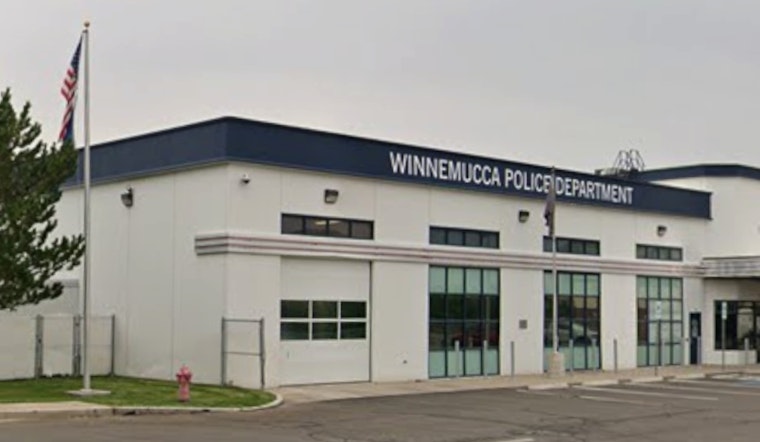
The ProPublica review indicates that roughly 10 agencies monitored opponents of the Thacker Pass project, including the Bureau of Land Management, the Bureau of Indian Affairs, the Humboldt County Sheriff’s Office, the Nevada State Police Highway Patrol, Winnemucca police and the Nevada Threat Analysis Center. The bulk of that activity involved surveillance and information-sharing rather than arrests. Only one arrest has been tied to protests so far, and local officials described their role as focused on monitoring and de-escalation.
Rights Complaints And Blocked Access To Sacred Ground
In a February report, Human Rights Watch and the American Civil Liberties Union concluded that the federal permitting process for the Thacker Pass mine violated Indigenous peoples’ rights by failing to secure free, prior and informed consent. The groups also found that mine construction has already prevented Numu/Nuwu and Newe community members from reaching parts of Peehee Mu’huh. They urged that construction be paused until there is meaningful consultation and remedies in place.
Federal Stake, Private Cash And A Race To Build
The U.S. Department of Energy recently announced changes to its loan package that give the agency a 5% economic stake in Lithium Americas and a 5% stake in the Thacker Pass joint venture through warrants. The agency says the move protects taxpayers while helping unlock financing for construction. In its update, the U.S. Department of Energy said the revised terms are intended to help onshore battery-grade lithium production, and Lithium Americas described the initial $435 million loan drawdown and related conditions in a company release. Lithium Americas’ statement frames the financing as essential to moving Phase 1 of the mine forward, as per Business Wire.
Private investors are also lining up. Reporting from Grist notes that Orion Resources Partners LP has committed about $250 million to help complete Phase 1, a deal company officials say will speed construction toward a late-2027 start. Company filings and press releases link the Orion money to a larger financing package that includes support from the DOE loan and partner commitments.
Tribal Leaders Flag Safety, Services And “Man Camp” Fears
Tribal representatives and local advocates warn that an influx of workers and heavy construction can strain already limited local services and heighten risks to women and children. Those worries mirror long-standing concerns around temporary worker housing. Reporting by the Watershed Sentinel quotes Fort McDermitt community members who say medical care and emergency response are already stretched thin and that the social impacts of temporary camps, traffic and population spikes are a serious and immediate concern.
Legal Fights And Civil-Liberties Alarms
Multiple tribes and community groups have tried to halt the mine through the courts, but those challenges have so far failed to stop construction, a point highlighted by Human Rights Watch in its report. At the same time, the web of law-enforcement monitoring has raised civil-liberties questions about how far agencies have gone in coordinating surveillance of largely peaceful Indigenous and environmental activism. That concern runs through coverage by High Country News and other outlets.
For now, mine backers are pushing ahead with financing and ground work, while activists, attorneys and rights groups continue to press for stronger oversight, more transparency and real remedies to protect sacred places and the people who stand up for them. The documents and reporting underscore that the battle over Thacker Pass is not just about lithium under an ancient caldera. It is also about who controls access, information and the story of what is happening on that high desert ground.





