

























































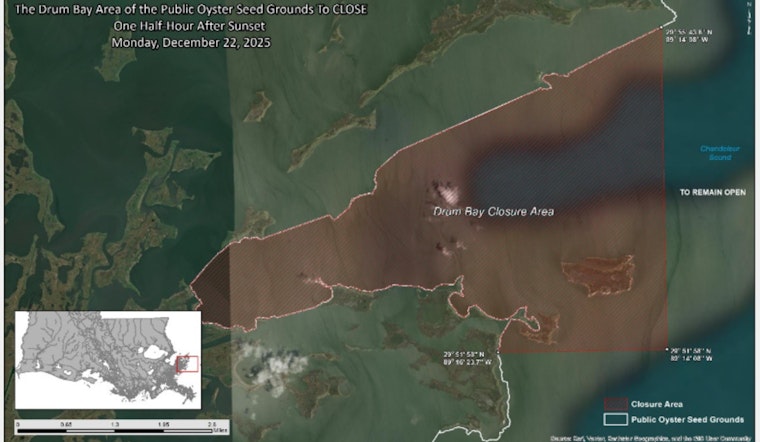
Louisiana's oyster aficionados will have to look elsewhere for their bivalve fix as the Louisiana Department of Wildlife and Fisheries has announced the closure of oyster harvesting in parts of Drum Bay and Shell Point Reef in St. Bernard Parish. The halt in harvesting begins just half an hour after sunset on December 22, according to a recent Louisiana Department of Wildlife and Fisheries announcement. The decision comes as a response to a "localized mortality event" and heightened harvesting pressure, which has turned up the heat on the already stressed oyster populations in these areas.
The closures will impact approximately 1,843 acres of oyster-rich areas, including natural reefs and constructed oyster beds known as cultch plants. Despite the potentially grim sound of these numbers, the closures are expected to be a mere drop in the ocean when compared to Louisiana's overall oyster production. To put it in perspective, in 2024, the state reported a haul of 991,264 sacks of oysters with, the bulk of that originated from private oyster cultivation on leased water bottoms, as reported by the Louisiana Department of Wildlife and Fisheries.
While some may cry over spilled milk, or in this case, unharvested oysters, the Louisiana Department of Wildlife and Fisheries insists that this stoppage is a stretch in the long run of oyster management. It's all in the name of sustainability, folks. Ensuring that future generations can continue the grand tradition of oyster slurping is at the heart of their decision. These closures do not affect the state's other public oyster areas opened for market-size oysters on November 3, nor do they impact state oyster leases.
For oyster harvesters, this situation isn’t permanent. Trappers may be able to return to Drum Bay later in the season if oyster populations recover. Harvesters know it’s sometimes necessary to let the oyster beds rest. The oyster decline is linked to environmental stress and human activity, which increase murky water and sediment that can harm oyster gills, as noted by the Louisiana Department of Wildlife and Fisheries.
Oyster patrons and cultivators alike can stay abreast of the latest maritime edicts by checking the Louisiana Department of Wildlife and Fisheries website for maps of the current closure areas and for any updates on seasonal openings, delays, or further closures. The commission has given Louisiana Department of Wildlife and Fisheries Secretary Tyler M. Bosworth the green light to take emergency actions based on real-time biological data or enforcement issues. As always, public notice will be provided with a 72-hour lead time for any significant changes unless public health concerns prompt an immediate shutdown. For further information, interested parties can reach out directly to Robert Caballero at the department via phone or email.



