

























































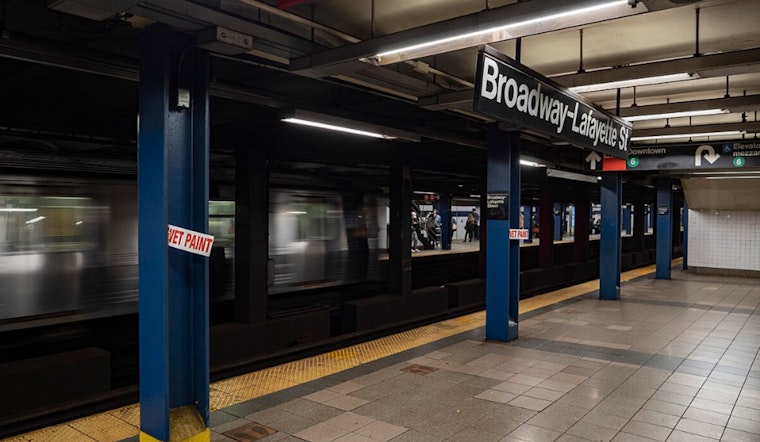
Commuters at the Broadway-Lafayette subway station in Soho experienced delays this week following the rollout of new fare gates. NBC New York reported that the MTA’s pilot program, which replaced traditional turnstiles with tap-and-go systems, caused a bottleneck on Monday, with at least 30 people waiting at the entrance during the afternoon rush. An MTA worker was on hand to help direct passengers through the gates.
Security concerns have also emerged with the new fare gates. According to the New York Post, some riders have found ways to bypass the system, including following another passenger through the gate or moving under the panels. Instances of fare evasion have been observed, including one involving an elderly man with a cane.
The gates, which feature sliding Plexiglas doors, have been criticized by MTA workers for their limited effectiveness in preventing fare evasion. An MTA employee told the New York Post, “It’s so easy to beat the fare just by following someone through. I stand here all day watching people do it. We can’t do anything.” The issues raise concerns about potential financial losses and safety risks.
The MTA has noted that the new gates are part of a pilot program. A spokesperson stated to the New York Post, “As we evaluate their performance, we’re learning more every day about how to design modern, effective fare gates for New York City.” Safety issues have also been reported, including one commuter who got their head caught between the doors. The pilot program is part of a $1.1 billion initiative to modernize subway access and address fare evasion, which the MTA estimates cost approximately $400 million last year.
The concerns over the new fare gates come at a time when subway fares are set to increase to $3 starting January 4, 2026. This fare hike only adds to the stakes for the MTA to resolve both the functional failures and fare evasion vulnerabilities of their new system. With 150 subway stations slated to receive these gates, the outcome of this pilot program could have wide-reaching implications for the future of NYC transit.



