

























































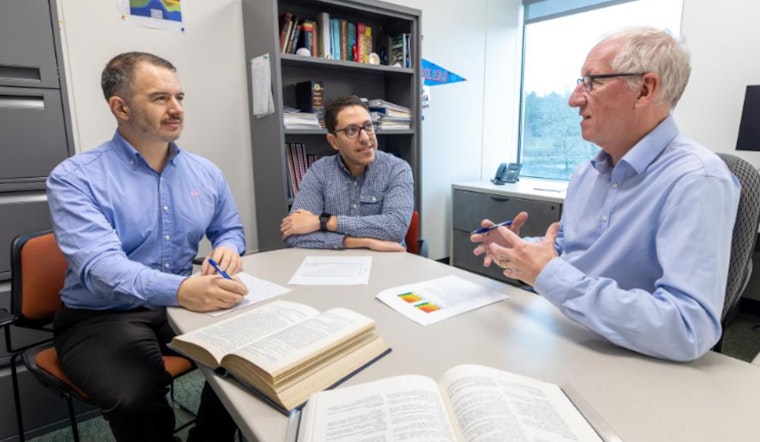
As the world continues to aggressively seek out clean energy solutions, nuclear fusion is frequently cited as the holy grail of carbon-free energy. Key insights gleaned from the extensive history of nuclear fission are now being used to propel fusion technology forward, according to an article from the Oak Ridge National Laboratory. Michael Loughlin, a seasoned scientist at ORNL, has been bridging the gap between the disciplines, utilizing his over 35 years of experience in fusion neutronics and diagnostics to inform the design of next-generation fusion systems.
Both fusion and fission rely heavily on the behavior of neutrons, but as Loughlin explained, there's a marked difference when it comes to their energy levels. In a fusion reaction, neutrons have a much higher energy, roughly 14 million electron volts. This energy disparity leads to additional challenges for fusion systems that do not exist for fission reactors. These include issues such as maintaining a high-powered vacuum environment and managing cryogenic components. However, Loughlin pointed out that "both types of reactions involve similar issues, including radiation shielding, radiation damage to materials, induced radioactivity and radioactive waste, and the need for remote handling." With this foundation, the fission experience can be a critical resource in overcoming hurdles faced by fusion technology, Loughlin told the Oak Ridge National Laboratory in an interview.
Learning from nuclear fission, engineers are working to apply conventional wisdom to the unprecedented conditions of fusion plants. One lesson is optimizing radiation shielding with materials that occupy minimal space, such as heavy concrete. Another is the development of specialized steel alloys that severely reduce the production of long-lived radioactive waste. With the expectation that the first fusion power plant will generate more neutrons in its initial few seconds than all controlled fusion experiments to date, designs must be robust and informed by the preceding nuclear era, as Loughlin stated in his interview with the Oak Ridge National Laboratory.
Loughlin is integral in the creation of computer models that predict the behavior of radiation in a fusion plant's environment. These models must be incredibly detailed, incorporating every source of radiation and plant component. It is a complex task that requires both innovative thinking and powerful computational resources. The aim is to maintain "the operability and safety of the plant" as these models will need to simulate the impact of nuclear radiation on an unprecedented scale. Iterations like these are vital in ensuring the feasibility of future fusion reactors, according to statements obtained by the Oak Ridge National Laboratory.
The potential for fusion to work alongside fission in the future energy landscape is increasingly promising. Given its capacity for 24/7 energy delivery, fusion could serve as a perfect partner to existing baseload generators while also assisting with the management of spent nuclear fuel, thereby addressing one of the most stubborn issues in nuclear waste disposal. Collaboration in the fields of nuclear data, materials performance under high neutron flux, and the minimization of radioactive waste are areas that could benefit both fusion and fission research, enhancing the pace of innovation. Oak Ridge National Laboratory continues to foster such collaboration, notably through materials testing at the High Flux Isotope Reactor, as outlined in a report by the Oak Ridge National Laboratory.





