

























































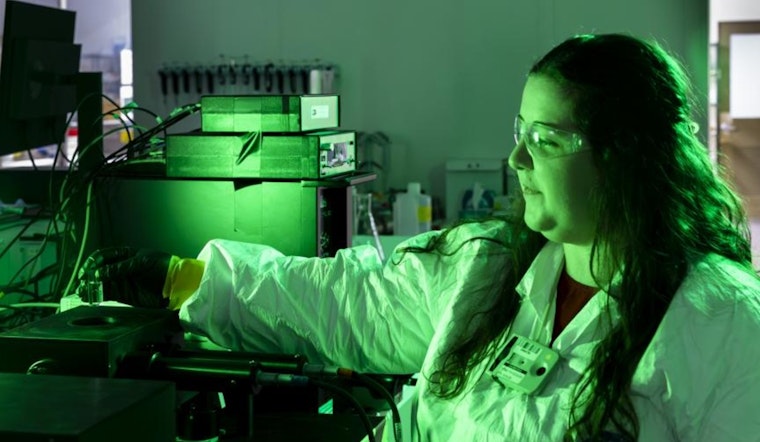
Innovation in nuclear fuel recycling could significantly redefine the future of energy security, according to the latest from the Oak Ridge National Laboratory (ORNL). Amidst a global reevaluation of used nuclear fuel management, radiochemical engineer Katie Johnson leads the research at ORNL, aiming to improve the efficiency by closing the nuclear fuel cycle.
Presently, the nuclear industry operates an open fuel cycle where used nuclear fuel isn't recycled but is treated as waste. Engaged in pioneering work, Johnson and her team strive to seamlessly integrate recycling within nuclear fuel management, as detailed in an interview with ORNL. She explains that "a closed fuel cycle would mean that our nuclear fuel management strategy would incorporate recycling processes to reduce the amount of waste, to reuse unburned fuel material, and to recover other valuable fission products for other applications."
Importantly, the reuse of nuclear fuel aligns with environmental stewardship and the nation's drive towards energy independence. "Recycling and reusing fuel extend the life of nuclear resources by maximizing the energy extracted from uranium ore," Johnson remarked to ORNL. This process not only mitigates the dependency on uranium mining but also responds to the escalating demand for energy.
Technological advancement is key in enabling this shift towards a closed fuel cycle. ORNL studies and develops two primary recycling technologies for used fuel: aqueous dissolution, also known as PUREX, and pyrochemical processing. These technologies are crucial for the extraction and purification of reusable materials from spent fuel. As Johnson expressed in her interview with ORNL, her research "focuses on the development of separations technologies for capturing radionuclides." The Iodine Off-gas Testing and Abatement (IOTA) Laboratory at ORNL plays a crucial role in employing solid sorbents for radioiodine capture.
Addressing the challenges ahead, Johnson acknowledges that radionuclide management and workforce development are crucial priorities. A diversifying landscape sees private sector involvement growing in used fuel management, prompting the need for varied management strategies. "Scientists developed most nuclear recycling technologies decades ago," Johnson stated in the ORNL publication. "A new generation can expand upon that legacy with more intentional training and professional development for nuclear scientists."
Managed by UT-Battelle for the Department of Energy's Office of Science, ORNL stands at the forefront of this transformative work. Committed to solving some of the most pressing energy challenges, their research not only seeks to optimize resource use but also aims to enhance the safety and security of nuclear fuel cycles in alignment with regulatory compliance and environmental protection. For more on this topic, additional insights can be found on ORNL's official website.





