

























































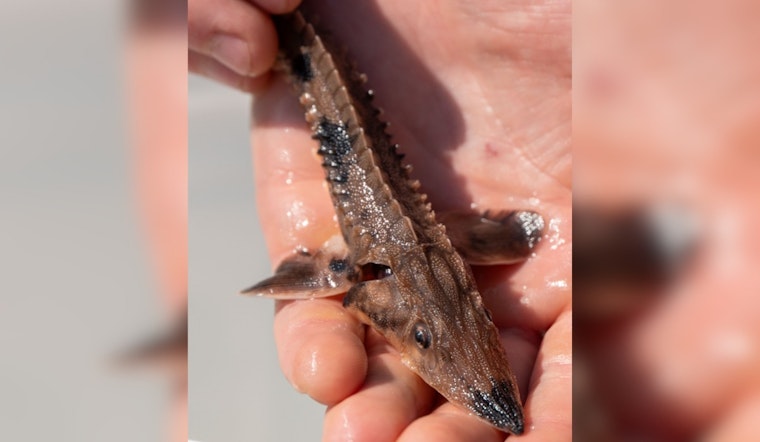
In a significant step toward conserving Ohio's aquatic biodiversity, the Ohio Department of Natural Resources (ODNR) Division of Wildlife has expanded its lake sturgeon reintroduction program into three new rivers this year. These efforts, introduced to the Cuyahoga, Sandusky, and Scioto rivers, come after years of the species' local endangerment. ODNR reports that this initiative is part of a wider regional partnership aiming to repopulate the ancient fish that has largely disappeared due to past unregulated harvests and habitat access barriers erected by dams.
Collaborating with the U.S. Fish and Wildlife Service and the Toledo Zoo, the ODNR saw fit to slowly reintroduce young lake sturgeon, measuring 6 to 8 inches in length, back into their historic habitats. The Cuyahoga River received about 2,000, while the Maumee River, hosting its annual Sturgeon Fest, welcomed 3,000, and the Sandusky River saw an addition of 750. Not to be sidelined, the Scioto River, aided by The Ohio State University's expertise, also got its first batch of 30 tagged juveniles in November. These efforts not only aim to restore the species but also to ensure careful tracking of their movements and development.
Lake sturgeon are bottom-dwellers that hold the title as the largest fish found in the Great Lakes, capable of a decades-spanning lifespan that could reach over the century mark, and sizes up to 8 feet and 200 pounds. The state-endangered fish possess a slow reproductive rhythm, with females requiring upwards of 25 years to reach sexual maturity and spawning only every few years. ODNR emphasizes this as they work to create a sustainable, reproducing population in the Lake Erie and Ohio River watersheds — a long-term commitment for sure, but one with hope now illuminated by these recent actions.
Biologists anticipate that the sturgeon released will eventually travel to their destined waters of Lake Erie or the Ohio River, depending on their release points, and with maturity, potentially come to naturally repopulate. The Division of Wildlife has been encouraged to continue their release efforts in all four rivers in the coming years, following promising signs from initial releases initiated since 2018. These early signs, according to the ODNR, include the documented increase of lake sturgeon in Lake Erie following their reintroduction in the Maumee River, fueling optimism for the success of the program in the new rivers.
The importance of lake sturgeon to Ohio's ecosystem health and their significance to cultural and natural heritage warrant their protection and careful management. The ODNR Division of Wildlife underlines this mission, dedicated to ensuring these majestic creatures once again thrive in Ohio waterways. Ohioans who encounter lake sturgeon are encouraged to report their sighting through the Division's website and release them with care if inadvertently caught. For those interested, more information on lake sturgeon and the statewide conservation efforts can be found on the Division's site at wildohio.gov.





