

























































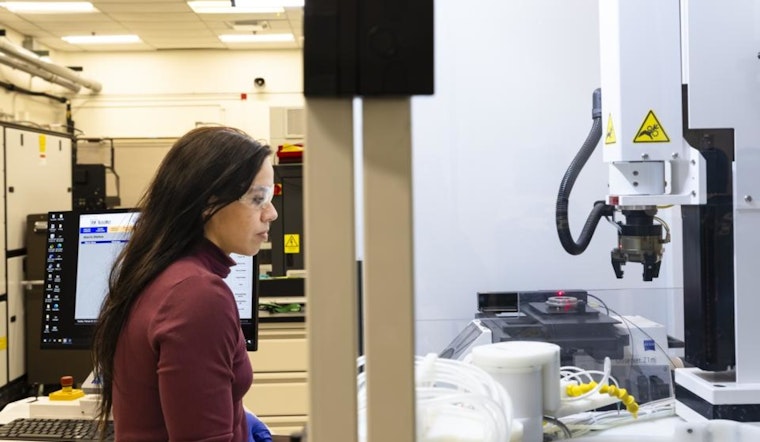
With an ever-increasing demand for energy, Denise Adorno Lopes of Oak Ridge National Laboratory (ORNL) is leading the charge in developing safer and more efficient nuclear fuels. As detailed in a recent announcement from ORNL, Lopes and her team are pushing the boundaries of nuclear fuel design, improving how we harness the enormous energy contained within uranium. Addressing why nuclear energy is a powerhouse, Lopes explained, "Nuclear fuel stores an enormous amount of energy in a very compact amount of space," bolstering the energy grid, especially in high-demand areas.
Several efforts at ORNL are underway to close the gap on fuel efficiency and safety. Innovative cladding materials and manufacturing approaches are being investigated to boost accident tolerance within nuclear reactors. Not only are these advances crucial for future energy security, but they also play a role in maintaining U.S. competitiveness on the global stage. Advanced microstructures and conductivity compounds, Denise Lopes notes, "aim to improve the microstructure of fuel and improve how heat is conducted," which should serve to mitigate the risk of adverse events in reactors.
The push towards advancing nuclear technology doesn't stop at enhancing conventional fuel designs. Researchers are delving into alternative forms like uranium nitride and uranium carbide, which could potentially power advanced reactor designs more efficiently. This still presents challenges, particularly in terms of maintaining stability during the irradiation process, where the fuel is subject to intense neutron bombardment. "During irradiation, these fuels can swell, release gases, and their microstructures can change," Lopes disclosed, highlighting the need for further experimental data to ensure the reliability of these innovative fuels.
Lopes's team is exploring accelerated qualification processes for new fuels by integrating advanced computational modeling with rigorous experimentation, including targeted irradiation experiments using ORNL's High Flux Isotope Reactor. "Our group at ORNL accomplishes this by incorporating tightly controlled fuel fabrication and characterization," Lopes told ORNL, illustrating a comprehensive approach that could streamline the deployment of nuclear fuels and, hence, the reactors that utilize them.





