

























































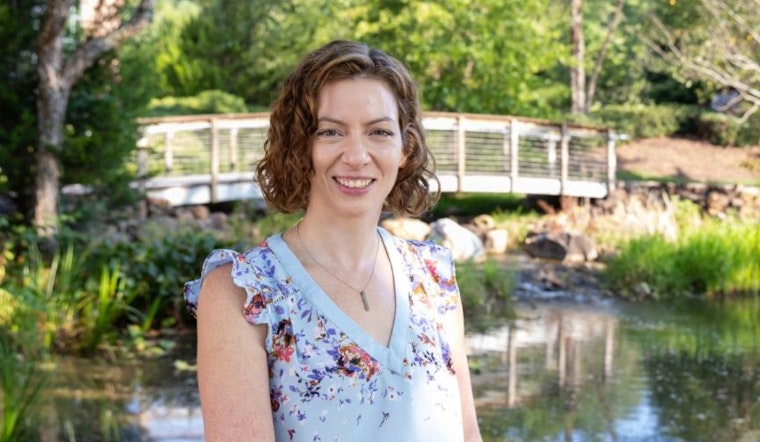
In an article published by Oak Ridge National Laboratory, Caleigh Samuels, a scientist at ORNL's Center for Radiation Protection Knowledge (CRPK), is making strides in nuclear workforce safety by integrating artificial intelligence into research efforts, particularly through the development of biokinetic models that are essential in assessing radiation exposure and informing guidelines, these models are mathematical representations that track the movement of radioactive substances through the body over time, yielding critical data to guide decision-making.
With her research, Samuels aims to provide high-quality data that informs and refines safety standards across various nuclear-related occupations, not only the federal agencies like the Department of Energy, the Nuclear Regulatory Commission, and the Federal Drug Administration are benefiting from Samuels' work, but its impact also extends to workers in nuclear power plants, medical technicians, and patients undergoing radiotherapy treatments. In an earlier report this year, new methodologies for assessing external exposure to radionuclides in different environments were developed, according to the Oak Ridge National Laboratory. She and her colleagues also crafted an age- and sex-specific biokinetic model for radon in 2023, which has the potential to enhance radiation safety protocols and might aid the medical community in better understanding neurodegenerative disorders.
The utilization of AI, specifically Monte Carlo algorithms, is central to Samuels' approach, as these computational methods tackle complex scenarios by evaluating numerous potential outcomes to deduce the most probable one. This statistical approach allows Samuels and her team to extract valuable insights from data that may further innovations in nuclear technology and medical applications. When discussing her work with ORNL, Samuels stated, “Our research at ORNL provides quality data to enable reasonable exposure limits that can guide decision-making,” a sentiment that underscores the practical impact of her scientific endeavors.
Samuels is part of a larger effort called the Million Person Study (MPS), a collaborative project among multiple institutions that scrutinizes the health effects of low-level radiation exposure on a vast group of workers, including nuclear power plant staff, X-ray technicians, and astronauts. Her contributions to the MPS include refining historical data and implementing machine learning to unveil dose-response relationships. Samuels acknowledges the variations in radiation impact on different genders, particularly post-menopausal women; her research is currently addressing how doses may need to be recalibrated based on these distinct physiological characteristics. She told Oak Ridge National Laboratory, “Bone remodeling processes change rapidly once females hit menopause, meaning their dose limits for bone-accumulating radionuclides like strontium or radium likely need to change as well.”





