

























































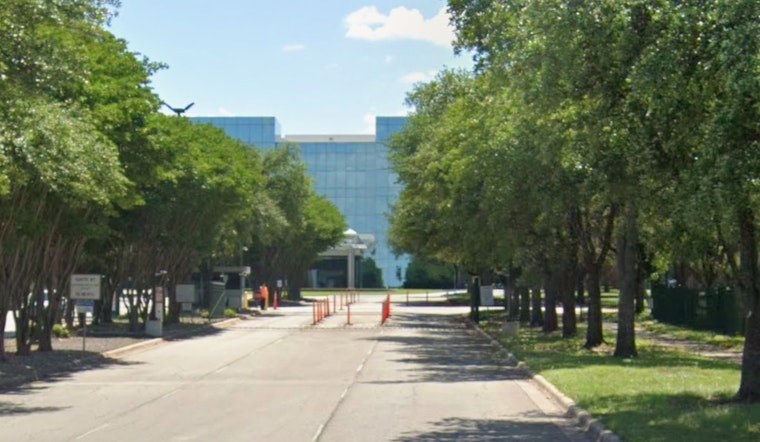
Samsung is putting $12 million into a multi-year renovation at its Austin semiconductor campus, focusing on waste-tank and secondary containment upgrades at the site at 12100 Samsung Boulevard. Construction quietly kicked off in mid October, and company records indicate the work is expected to run for roughly four years, with a tentative finish in December 2029. The planned buildout, about 3,750 square feet with a permanent swing tank and transfer-tank containment, is a targeted operational upgrade rather than a new line of wafer production.
Those details appear in a filing with the Texas Department of Licensing and Regulation. The state listing shows a registration date of Dec. 23 and an Oct. 15 construction start, along with the four year timetable and the project’s approximately 3,750 square foot scope. The filing describes the installation of a permanent “swing tank within a new containment area” and other transfer tank containment infrastructure. TDLR entries are treated as initial estimates, so costs, scope and timing can shift as plans move through permitting and construction.
Local context
As reported by MySanAntonio, Samsung has operated the Austin campus for nearly 30 years, and the $12 million project is framed as an expansion of waste handling capacity rather than a new production line. That local reporting underscores how relatively small, targeted capital improvements at older facilities can run in parallel with much larger regional bets.
How this ties to the Taylor expansion
The Austin upgrade comes as Samsung is building a far larger fabrication complex in nearby Taylor. San Antonio Express-News coverage has described that project as roughly a $17 billion investment and noted that full production has slipped into 2028 or later. Federal filings and announcements have also tied major CHIPS Act funding and other incentives to Samsung’s Central Texas plans, a dynamic the U.S. Department of Commerce outlined in earlier briefings. Taken together, the comparatively small Austin investment reads as maintenance and containment work intended to keep an existing campus running smoothly while the Taylor site scales up.
Permits and local oversight
Samsung’s projects in Central Texas have drawn close local oversight. In November, the Austin City Council formally nominated Samsung Austin Semiconductor for a state economic designation that helps shepherd large projects through incentives and permitting, according to the council agenda. That nomination, along with related local actions, is part of the same ecosystem of approvals and reviews that smaller renovation projects also have to navigate.
For Austinites, the $12 million revamp is unlikely to alter day to day life, but it signals Samsung’s intent to maintain and modernize an older campus even as the company’s mega site in Taylor continues to rise. Observers should expect filings and timelines to be updated as the work moves through local permits and construction phases.





