

























































San Francisco has rolled out what may be the most sophisticated trash can you've ever seen. But these aren't for your everyday garbage—they're designed to safely swallow up all those dead phones, electric toothbrushes, and vape pens that have been languishing in your junk drawer for years.
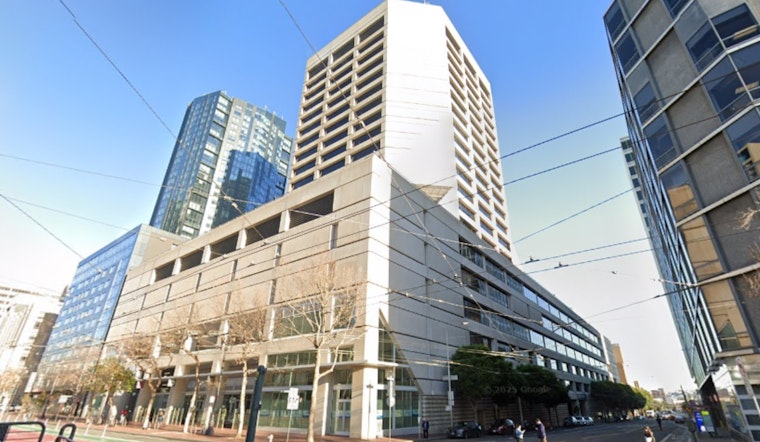
The city has become the first in the nation to deploy fully automated battery recycling bins that accept mixed batteries and battery-embedded products with zero prep work required. Just drop your old laptop or electric razor into a slot, and the bin's internal sensing system takes care of the rest. Eight of these high-tech receptacles have popped up across the city at four Cole Hardware locations and three Sports Basement stores, plus Four Embarcadero Center.
The Battery Fire Problem
The timing couldn't be better. San Francisco has seen a dramatic increase in fires caused by lithium-ion batteries in recent years, according to the San Francisco Fire Department. These fires are particularly nasty—they flash over quickly, grow fast, and are notoriously difficult to extinguish because of the chemical hazards involved. Nationally, recycling facility fires jumped to record levels in 2024, with publicly reported incidents at materials recovery facilities increasing by 20% over the prior year, according to Resource Recycling.
The culprit? Improperly disposed lithium-ion batteries that get jostled or punctured during collection and processing, entering what the industry calls "thermal runaway"—a polite term for catching fire. The National Waste and Recycling Association estimates that more than 5,000 fires occur annually at recycling facilities, many linked to these batteries, according to Resource Recycling.
First-of-Its-Kind Technology
The bins were engineered by Redwood Materials, a battery recycling company founded by Tesla co-founder JB Straubel. When you drop a device into the slot, it gets automatically lowered into a sealed 50-gallon drum and coated with fire suppressant, as Fast Company reported. The bins also use sensors to continuously monitor themselves to prevent fires—a crucial advancement, since previous collection bins required staff monitoring to manage fire risks.
According to the San Francisco Environment Department, the bins accept loose lithium-ion batteries plus small rechargeable devices like phones, laptops, electric toothbrushes, razors, headphones, and wireless devices. From the outside, it looks simple—just a deposit slot. But inside, each unit runs a sophisticated sensing and materials-management system operating continuously in the background.
The Circular Economy Pitch
"Electronics are one of the largest untapped sources of critical materials, such as cobalt, nickel, lithium, and copper, which are essential to powering our energy future," said Alexis Georgeson, Redwood's Vice President of External Affairs and Consumer Recycling Programs, in a statement. "But today, only 16% of these devices are ever recycled, and these materials get stranded in America's junk drawers or sent to landfills."
Redwood Materials, which has raised over $1 billion in funding and operates a massive recycling facility in Carson City, Nevada, aims to create a closed-loop supply chain for electric vehicle and clean energy batteries. The company claims to have recovered more than 95% of important metals from old battery packs, according to Wikipedia. Straubel, who spent 15 years as Tesla's CTO before founding Redwood in 2017, has been working to build what he calls a "circular supply chain" that can recover and remanufacture nearly 100% of the materials in batteries.
A Cole Hardware Partnership
The partnership with Cole Hardware is particularly fitting for a sustainability initiative. The family-owned chain, run by the Karp family since 1959, has long been a leader in environmental efforts. Cole Hardware became the first green-certified hardware stores in the nation when its locations earned certification from San Francisco's Green Business Program starting in 2006, according to Cole Hardware.
"Helping make everyday tasks easier for our neighbors is what Cole Hardware is all about," said Co-Owner Rick Karp in a statement. "That's why we're excited to partner with Redwood Materials and SF Environment to make battery and device recycling safer and more convenient for communities across San Francisco."
The bins are currently available at Cole Hardware's four San Francisco locations: Cole Valley (956 Cole St), Downtown (70 4th St), North Beach (627 Vallejo St), and Russian Hill (2254 Polk St). Sports Basement locations at Presidio (610 Old Mason St), Stonestown (3251 20th Ave Suite 390), and Bryant Street (1590 Bryant St) also have bins, along with Four Embarcadero Center.
Why Now Matters
The deployment builds on San Francisco's nearly 30-year-old Climate Action Plan, which has driven innovations from the city's pioneering three-bin waste system to clean-energy expansion. Mayor Daniel Lurie framed the battery bins as part of that legacy. "San Francisco is the place to be for companies driving the future of climate innovation and new technology," he said in a statement.
SF Environment Director Tyrone Jue emphasized the growing urgency as the world transitions to electric technologies. "Battery disposal is a very serious matter, and batteries should always be disposed of properly and safely," he said. "Expanding innovative recycling options for embedded batteries is essential as the world transitions to cleaner electric technologies."
For residents who've been wondering what to do with that drawer full of dead electronics, the answer just got a lot simpler. And unlike the old approach—which required separating batteries, taping terminals, and finding the right drop-off location—these bins accept everything mixed together. It's hard to imagine a lower barrier to entry for doing the right thing.
Redwood Materials plans to expand the bins to other parts of the Bay Area, then Nevada, before deploying them nationally. San Francisco residents can find the nearest bin location at SFRecycles.org.




