

























































A former Google engineer accused of walking off with some of the company’s most sensitive AI infrastructure secrets is set to face a federal jury in San Francisco in early January 2026, after prosecutors expanded the case to add economic-espionage charges. The superseding indictment accuses the engineer of quietly copying troves of highly technical files from Google’s internal systems while cultivating ties with startups based in China. Jury selection is scheduled for the first week of January, with trial days scattered across the month.
Prosecutors expand charges
According to the U.S. Attorney’s Office for the Northern District of California, a federal grand jury returned a superseding indictment charging Linwei Ding, who is also known as Leon Ding, with seven counts of economic espionage and seven counts of theft of trade secrets. The U.S. Attorney’s Office says the superseding indictment alleges Ding uploaded more than 1,000 unique files from Google’s network to a personal cloud account between May 2022 and May 2023.
What prosecutors say was taken
Prosecutors say the material included detailed architecture and design specifications for Google’s tensor-processing-unit chips, GPU systems, and custom SmartNIC network cards, technology they argue sits at the heart of the cloud infrastructure used to train large AI models. Reuters reports that the indictment links those uploads to efforts to build comparable computing platforms at companies based in China.
How Google flagged the activity
The case was first unsealed in March 2024 and announced by Attorney General Merrick Garland, according to the Justice Department’s initial indictment. The Justice Department has said Google detected anomalous activity on its systems late last year and alerted federal authorities. Google later informed reporters it found that this employee had stolen numerous documents, and we promptly referred the case to law enforcement.
Court calendar and the judge
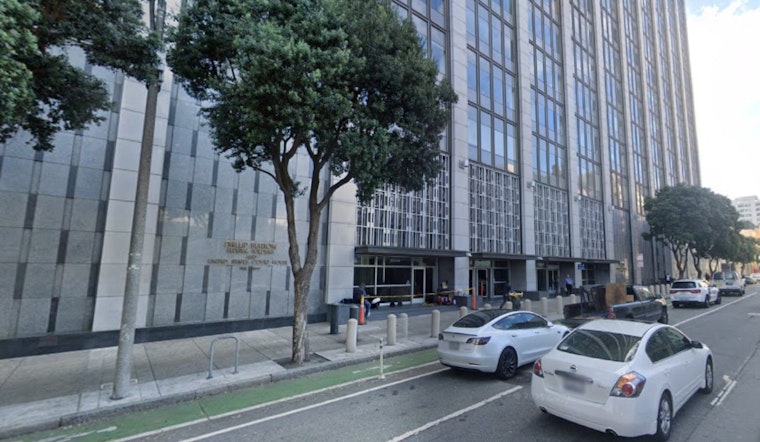
Judge Vince Chhabria’s docket shows jury selection for USA v. Linwei Ding, No. 3:24-cr-00141, set for Jan. 7, 2026, with trial days scheduled throughout January in San Francisco. The court's calendar lists multiple jury-trial dates for the month and names Judge Chhabria as the presiding judge.
Pretrial fight over expert testimony
Pretrial filings and hearing notes indicate that defense lawyers plan to put a technical expert on the stand, but the court has already signaled doubts about that witness’s qualifications. As reported by MLex, U.S. District Judge Vince Chhabria said the proposed defense expert “doesn't know what he's talking about,” a pointed preview of a likely evidentiary showdown.
Legal stakes
Each economic-espionage count in the superseding indictment carries a potential maximum sentence of 15 years in prison and a $5 million fine, while each theft-of-trade-secrets count carries up to 10 years and a $250,000 fine, according to public filings and reporting. Reuters notes that the expanded 14-count indictment significantly raises Ding’s potential exposure.
Why the case matters locally and beyond
Prosecutors say the investigation was handled by the Justice and Commerce Departments' Disruptive Technology Strike Force, part of a broader national push to keep cutting-edge AI and chip expertise from flowing to foreign adversaries. AP frames the prosecution as one piece of that larger enforcement campaign.
The upcoming trial will test how a local jury handles dense technical testimony and whether the government can prove that the alleged copying was meant to benefit foreign firms. Silicon Valley litigators, corporate security teams, and federal officials are expected to watch closely for how the court rules on expert witnesses and what any verdict signals for hiring practices and confidentiality rules in the AI sector.





