

























































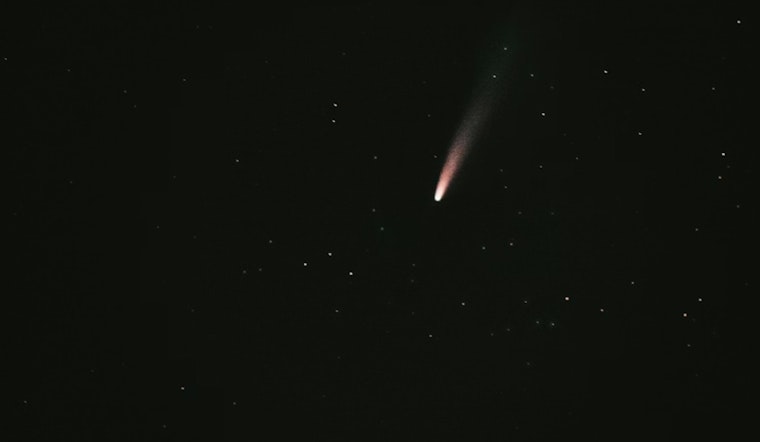
A meteor that was bright enough to illuminate the Sunday evening skies across Michigan has caught significant attention. According to The Detroit News, the meteor was part of the Geminids meteor shower, which is known for its bright and fast meteors that tend to be yellow in color. The Michigan Storm Chasers, with a network of over 90 cameras trained on the skies, captured the event, reporting the time of the sighting at approximately 6 p.m. The shower, as NASA details, is a regular annual celestial event with its meteors first appearing in the mid-1800s.
The meteor's visibility extended far, with reports from Illinois, Indiana, Michigan, Wisconsin, Ontario in Canada, and even Tamil Nadu in India, as per WLNS. Sharing the unique perspective of locals, Fred Vincent and Janice Beach posted videos of the meteor's passage, showcasing the green-hued light it cast as it entered Earth's atmosphere. The videos, illustrating for communities around Jackson to the Upper Peninsula, were added to the growing compilation of evidence of the meteor's journey over Michigan.
Lingering curiosity surrounds the possibility that the meteor may have deposited fragments on Michigan soil. The Michigan Storm Chasers suggested that the meteor broke apart over the area between Traverse City and Gaylord. As leading-edge weather watchers, the company conveyed their confidence in the comprehensive coverage of their camera network, capturing the potential breakup of the meteor as it entered the Earth's atmosphere.
For those intrigued by the technical definitions, a meteor is the luminous phenomenon observed when a meteoroid enters the Earth's atmosphere, creating a fiery trail across the sky. A meteoroid, often a small rock or particle, becomes a meteorite if it survives the descent and reaches the Earth’s surface, as defined by The Times Herald. In stark contrast to the peaceful skies typically sought for meteor-viewing, the American Meteor Society calls a fireball a very bright meteor and a bolide is one that explodes in a vibrant terminal flash, potentially scattering fragments as it ends its celestial show.





