

























































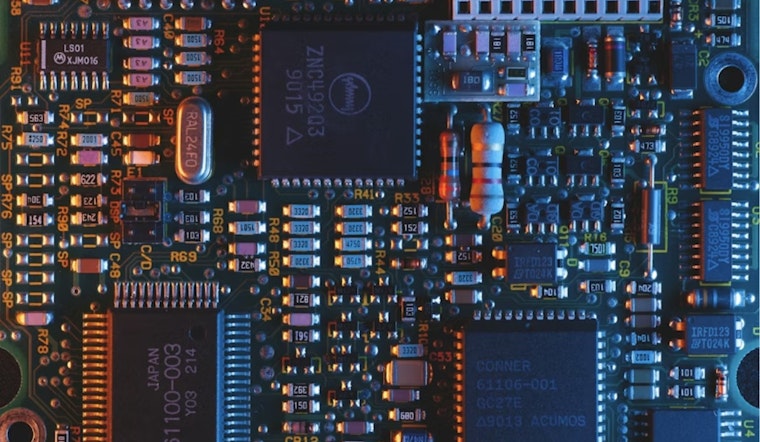
UC San Diego is moving into the thick of a national effort to grow chip design education and prototype-scale manufacturing, pairing open-source software with federal engineering programs. At the center is Professor Andrew B. Kahng and his group, whose projects span classroom tools, an NSF-backed national design hub and a DARPA research role that together aim to speed the path from student project to real silicon. For San Diego, the wager is that easier access to design tools and lab time will help turn local students into the engineers new fabs are counting on.
Chipshub aims to widen classroom access
Purdue University has secured a $7 million grant to operate “Chipshub,” an NSF-designated Chip Design Hub that will provide browser-based EDA tools, lab-ready course materials and train-the-trainer programs, with a five-year goal of reaching more than 100 universities, according to Purdue University. Purdue frames Chipshub as a national platform meant to expand teaching capacity and shore up a projected shortfall in the semiconductor engineering workforce.
OpenROAD’s 24-hour design claim
OpenROAD, a UCSD-led open-source EDA flow, is built to turn chip designs into manufacturable layouts in a “no-human-in-the-loop” 24-hour workflow, according to the project’s documentation. The tool started with DARPA backing and has since grown into a widely used educational and research toolkit after a multi-million-dollar development effort detailed by Technology.org. That reach matters because it provides instructors and students with a route to real-time tape-outs without relying on costly commercial licenses.
DARPA tie-in means research money and defense-grade prototyping
Kahng’s team at UC San Diego has been named by campus officials as a recipient of up to $9 million from DARPA’s Next-Generation Microelectronics Manufacturing program to develop next-generation microsystems, according to UC San Diego Today. That effort sits within a much larger DARPA commitment, an $840 million award to the Texas Institute for Electronics at The University of Texas at Austin, which will establish an open-access prototyping center involving dozens of industry and academic partners, per The University of Texas at Austin.
Tools, training and tape-outs
UCSD’s VLSI CAD laboratory notes that the campus will lead a two-year, $1.4 million NSF POSE Phase II project to grow OpenROAD’s open-source ecosystem and governance, joining the Chipshub effort in building scalable classroom and lab pipelines, according to the lab’s news page. Together, these initiatives are intended to bring down licensing and hardware hurdles so that more campuses can teach chip design and carry student and research projects all the way through manufacturing and testing.
For San Diego students and startups, the near-term benefits could include clearer paths from classes to internships and from lab projects to local jobs. UC San Diego has already launched NSF-supported pilot programs to expand semiconductor training and cleanroom access, underscoring the campus push to convert federal investment into tangible workforce results, according to UC San Diego Today.





