

























































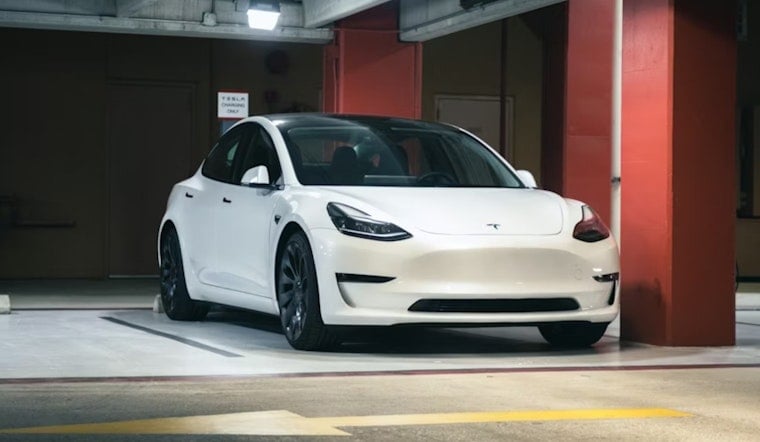
Xpeng CEO He Xiaopeng spent a recent visit to the Bay Area not in meetings, but in Teslas. After driving vehicles running the automaker's newest Full Self-Driving build, FSD v14.2, and riding in a Tesla robotaxi, he walked away calling the experience "near-Level 4" and clearly ahead of last year's software. He then put a date on the rivalry, publicly saying Xpeng should be able to match that performance in China by August 30, 2026.
According to Teslarati, He test-drove a Tesla running FSD v14.2 and also rode in a Tesla robotaxi, with both platforms reportedly relying on a single model that performed consistently during about five hours of driving across Silicon Valley and San Francisco. He told people following the test that the current release "significantly surpasses last year’s capabilities" and repeated his view that a common software and hardware approach is the fastest route to true L4 autonomy.
What He Tested
He later posted his impressions to Weibo, saying the trip reinforced his belief that the industry can move directly to a unified autonomous stack instead of lingering in L3 limbo. As reported by CnEVPost, He compared FSD v14.2 with Tesla's earlier FSD v12.3.6 and with Waymo runs he completed in mid 2024. His takeaway was nuanced: he saw Waymo as stronger on dense San Francisco streets, while Tesla looked better on Silicon Valley surface roads and highways.
Xpeng's Timeline And The Wager
Back home, He said Xpeng plans to roll out its VLA 2.0 smart-driving software next quarter, while warning that the first public version will not immediately be on par with Tesla's latest FSD. In comments covered by Sina, he turned that gap into a bet. If Xpeng's VLA can deliver the same overall effect in China by August 30, 2026, He said he will greenlight a Chinese-style cafeteria for Xpeng's Silicon Valley staff. If the team falls short, Liu Xianming, who leads Xpeng's autonomous driving unit, has reportedly promised a very public personal forfeit.
Xpeng's AI Day materials fill in the technical picture and the commercial ambitions behind that wager. The company describes VLA 2.0 as the backbone of its robotaxi effort, outlining the software stack and an early deployment roadmap. Xpeng says VLA 2.0 will enter pilot phases early next year.
Why Bay Area Test Runs Matter
The Bay Area remains the world's favorite sandbox for robotaxis, so a visiting rival CEO stress-testing the local products is not just sightseeing. His side-by-side impressions land right in the backyard of the engineers, investors, and regulators who live with these vehicles every day. At the same time, Tesla still faces permitting hurdles in California, a reminder that even impressive software does not skip the lines at local agencies or bypass safety oversight. That regulatory reality is part of why Xpeng is benchmarking its own system here before trying to bring similar capabilities to Chinese roads.
What To Watch Next
From here, the real test will be whether Xpeng's VLA 2.0 rollout looks anything like the performance He just praised. Watch for public demos, videos, or telemetry that the company releases to back up its timeline. Xpeng has said it will open source parts of VLA 2.0 for partners, while coverage from Benzinga notes the company expects multiple robotaxi models and pilot operations in 2026. Regulators in both the United States and China will be watching closely to see whether any of these systems can prove safer than human drivers before they are allowed to scale up.





