

























































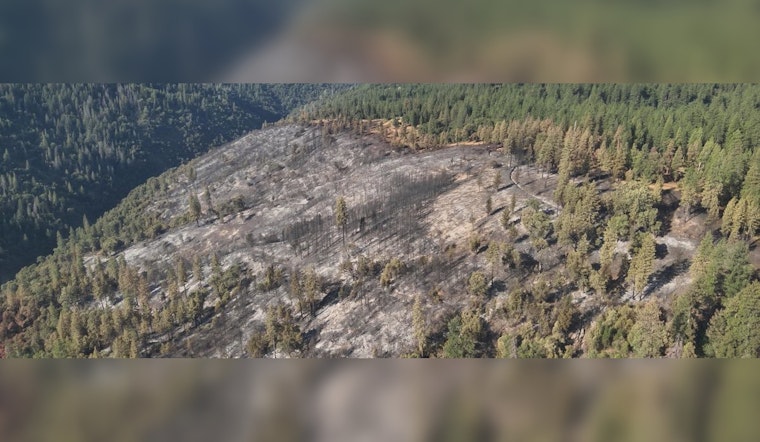
Fire crews say a 300 acre shaded fuel break above Tiger Creek in eastern Amador County helped slow the Tiger Fire and protect the nearby community of Pioneer. The project landed back in the spotlight this week after CAL FIRE's public information office reshared a wildfire task force post that walked through how the line performed. When the blaze drove up the canyon and hit the treated stretch, flames dropped to the ground and gave engines, hand crews and aircraft a place to stop the fire's forward push.
Strategic fuel breaks prove essential in protecting communities. A 300-acre shaded fuel break in Amador County helped fi…
— CAL FIRE PIO (@CALFIREPIO) Jan 27, 2026
Tiger Creek Fuel Break Gave Firefighters A Crucial Edge
According to the Bureau of Land Management, the Tiger Creek Fuel Break is a roughly 300 acre shaded fuel break completed in 2023 by the Amador Fire Safe Council on BLM managed land above Tiger Creek Reservoir near Pioneer. When the Tiger Fire hit that treated zone, "fire intensity lessened and flames remained at ground level," which allowed ground crews and aircraft to first slow and then stop the blaze. BLM officials say the line's placement along a ridgeline between the river canyon and nearby homes was a key factor in how well it worked.
Who Built It And Who Paid For It
The Amador Fire Safe Council handled planning and on the ground implementation while BLM staff took on environmental surveys and compliance. Official accounts name PG&E, the U.S. Forest Service, Sierra Pacific Industries and CAL FIRE as project partners. Funding for the Tiger Creek work came through a Sierra Nevada Conservancy grant, according to the Sierra Nevada Conservancy.
How Shaded Fuel Breaks Change Fire Behavior
Shaded fuel breaks are designed to trim down surface and ladder fuels and open the canopy so wildfires are less likely to climb into tree crowns. The result is lower intensity fire behavior that firefighters can safely attack. Quantitative research has found that burn severity and postfire damage are significantly lower inside treated fuel breaks, which helps explain why crews were able to stop the Tiger Fire where it met the treated strip, according to a study in Forest Ecology and Management. The same research underscores that these treatments need ongoing maintenance and smart placement to stay effective.
Local Officials See A Model For The Foothills
Local leaders say the Tiger Creek project ties into other completed and planned work that together form longer strategic lines of reduced fuels running from the reservoir toward Highway 88. AFSC Board President Pat Minyard has called the outcome "a testament to what collaboration and foresight can achieve," echoing the tone of official project releases. Agencies and local fire groups point to Tiger Creek as the kind of pre planned, multi partner effort they want to replicate across the Sierra foothills.
The Tiger Fire started on Aug. 8 and burned toward the 28000 block of Tiger Creek Road near Pioneer before crews gained the upper hand. CAL FIRE's incident page lists the location, size and containment updates and notes that evacuation orders were issued for nearby roads during the initial response, according to CAL FIRE. Local reporting from the Mother Lode region documents evacuation centers that opened in Jackson while firefighters mopped up and notes there were no reported civilian injuries or destroyed structures tied to the fire's forward spread.





