

























































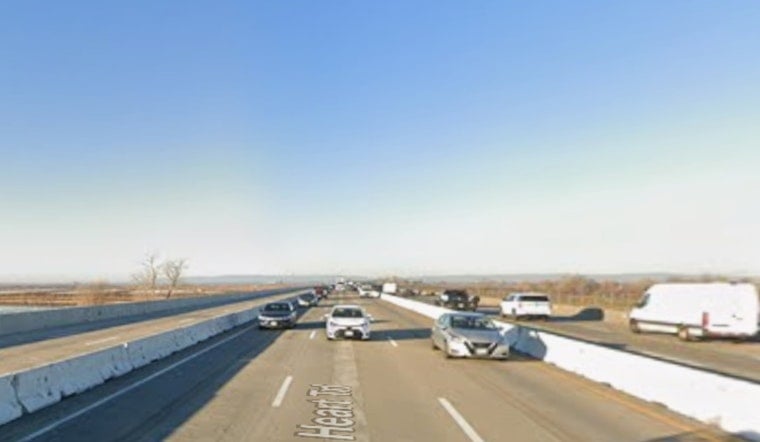
Seven years after crews broke ground, Caltrans says the sprawling widening project on Interstate 80 through Yolo County is almost finished, with new bus, carpool, and toll lanes expected to open on the Yolo Causeway by fall. The $465 million effort has squeezed traffic through Davis and across the causeway for years, and now officials and researchers are debating whether the disruption will actually pay off for the commuters who have endured it.
According to Abridged by PBS KVIE, Caltrans started the lane-widening and traffic-alleviation project in 2019 to reduce congestion on one of the region's most traffic-filled freeway stretches, the section connecting Davis and West Sacramento over the Yolo Causeway. Caltrans spokesperson Dennis Keaton told the outlet that most of the construction will be done by the fall, with officials aiming to have all lanes open by then. The completed project will add a bus and carpool lane along with a tolled express lane in each direction on I-80 between Davis and Sacramento, according to the outlet's reporting.
The tolled express lanes will let individual drivers pay to use a less congested lane, while carpools and buses can already bypass the usual rush-hour backups for free, per the same account. Keaton said carpool lanes make a difference, and Caltrans bases its decisions on studies showing that managed lanes work, the report notes. Managed lanes like these are increasingly used as traffic-management tools across California, with the goal of encouraging people not to drive alone while maximizing how much traffic a given lane can carry.
Why the Causeway Became a Bottleneck
The pressure behind the project is not abstract. Caltrans traffic studies found peak commute volumes on I-80 through Yolo County exceeding 10,000 vehicles per hour, according to ABC10, overtopping the freeway's designed capacity by more than 2,000 vehicles per lane per hour. That bottleneck sits on the Yolo Causeway itself, an elevated 3.2-mile concrete viaduct that first opened in 1916 and was rebuilt into its current six-lane form in 1962, according to background compiled on Wikipedia. The broader Yolo 80 Corridor Improvements Project stretches roughly 16.5 miles from Kidwell Road west of Davis to West El Camino Avenue in Sacramento, plus three miles of U.S. Highway 50, per background from UC Davis.
Funding for the work came from a mix of federal and state sources. The U.S. Department of Transportation awarded the Yolo County Transportation District an $85.9 million Infrastructure for Rebuilding America grant in 2021 to finance initial design and construction, according to a staff report from the Yolo County Transportation District. The California Transportation Commission followed in May 2024 with a $105 million Trade Corridor Enhancement Program grant, a move reported by SFGATE that also gave Caltrans the formal authorization needed to collect tolls on the interstate.
A UC Davis Researcher Pushes Back
Not everyone is convinced the new lanes will deliver lasting relief. Susan Handy told Abridged by PBS KVIE that adding freeway lanes only temporarily helps, and that managed lanes ultimately have the same congestion effect as any other added lane. She said the projects are being mis-sold to the public, arguing that an added lane can lead to more driving and a return to prior congestion within just a few years. In Handy's view, managed lanes are not a long-term solution to overall congestion relief.
That skepticism echoes concerns raised in Caltrans's own environmental review, which projected that adding express lanes will generate approximately 110 million additional vehicle miles traveled annually, according to the Los Angeles Times. That finding prompted lawsuits from environmental groups including the Natural Resources Defense Council, who argue that expanding highway capacity causes induced demand rather than durable congestion relief rather than solving it for good.
Offsets, Tolling Rules, and a Longer Wait for Equity
To address the projected increase in driving, Caltrans approved a mitigation plan that includes expanding Capitol Corridor passenger rail service between Martinez and Sacramento, subsidizing local transit fares, and building a 12-foot-wide bicycle and pedestrian path extension along the causeway, according to Caltrans's own project documents. Meanwhile, the Capital Area Regional Tolling Authority board voted in September 2025 to let vehicles carrying three or more occupants, along with motorcycles, use the future express lanes for free.
Even once the physical lanes are finished this fall, drivers will not see tolls right away. The tolling authority commissioned a $708,000 Regional Toll Equity Study running through late 2027 to address financial barriers for low-income motorists, with actual toll collection not set to begin until summer 2028. Board officials have also retained the authority to adjust the carpool occupancy threshold if the express lanes fail to maintain required travel speeds.
The causeway has drawn Hoodline's attention beyond traffic policy too. The span sits directly above the Yolo Bypass Wildlife Area, home to Northern California's largest urban colony of Mexican free-tailed bats, with more than 250,000 estimated to roost beneath the viaduct each summer, as Hoodline reported in its piece on the causeway's nightly bat spectacle. Hoodline also covered a dramatic rope rescue on the bridge deck this summer, detailed in coverage of the high-angle causeway rope rescue.
For now, the project remains covered by Daniel Hennessy, who reports on Yolo County for Abridged by PBS KVIE, and whose reporting forms the backbone of what is publicly known about the causeway's near-final construction timeline. Whether the new lanes ease the daily grind between Davis and Sacramento, or simply fill back up as Handy predicts, is a question that will not be answered until well after the concrete dries and the tolls finally switch on in 2028.




