

























































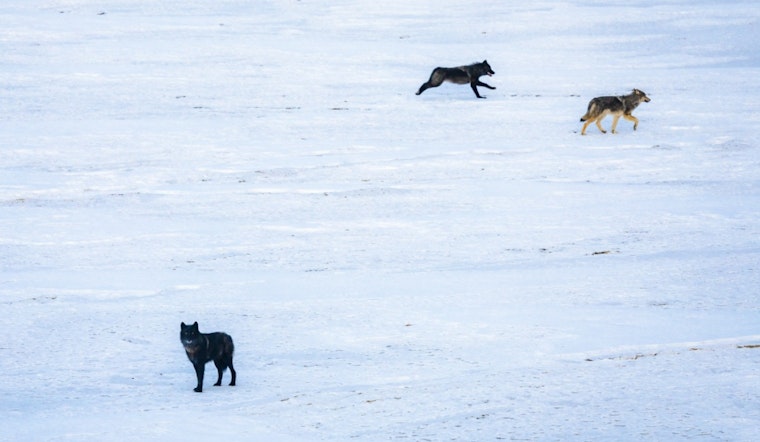
A female gray wolf that Colorado wildlife managers brought in from British Columbia just a year ago has been found dead in the state’s northwest, marking another loss for the state’s closely watched wolf reintroduction program.
The wolf, identified by its tracking collar as 2504, was discovered after a collar mortality alert on Friday, January 16, according to wildlife officials. Colorado Parks and Wildlife has confirmed the death and says the U.S. Fish and Wildlife Service will lead the investigation, since gray wolves remain protected under federal law. A necropsy is planned to determine what killed the animal, and state officials are withholding specific location details while the federal review is underway. The Denver Gazette reports that the collar alert came in on January 16.
Where the wolf came from
Wolf 2504 was one of 15 gray wolves translocated from British Columbia in January 2025, part of the second phase of Colorado’s reintroduction effort. The program began with 10 wolves released in December 2023. Colorado Parks and Wildlife says the releases follow the state’s voter-approved wolf restoration plan, and the agency tracks collared wolves with a public monthly activity map. According to Colorado Parks and Wildlife, the map and related program materials lay out how officials monitor and manage the relocated animals.
How many of the translocated wolves have died
OutThere Colorado’s running tally indicates that 2504 is the seventh death among the 15 wolves brought from British Columbia in 2025, a number that has sharpened scrutiny of how well the newcomers are surviving. Previous deaths in the broader reintroduction effort have included both natural causes and human-caused incidents, and wildlife officials say each mortality is investigated to guide future management decisions. As reported by The Denver Gazette, Colorado Parks and Wildlife has not released a precise location for this latest death.
Why the necropsy matters
Federal necropsies can sort out whether a wolf died from disease, predation, a vehicle collision, or illegal killing, and those findings will help determine whether managers need to change how they capture, release, or manage conflicts around wolves. Wildlife managers have long said that some losses are expected in any translocation program, but a steady or clustered series of deaths can trigger a formal review of methods and protocols. As outlined by The Aspen Times, Colorado’s wolf plan includes survival benchmarks and calls for a protocol review if survival falls below certain thresholds.
Colorado Parks and Wildlife says it will continue working with the U.S. Fish and Wildlife Service and local partners while the investigation into Wolf 2504’s death moves forward. The agency is asking landowners to report wolf sightings through official CPW channels so biologists can better track movements and head off conflicts, and it has said it will release necropsy results once they are available.





