

























































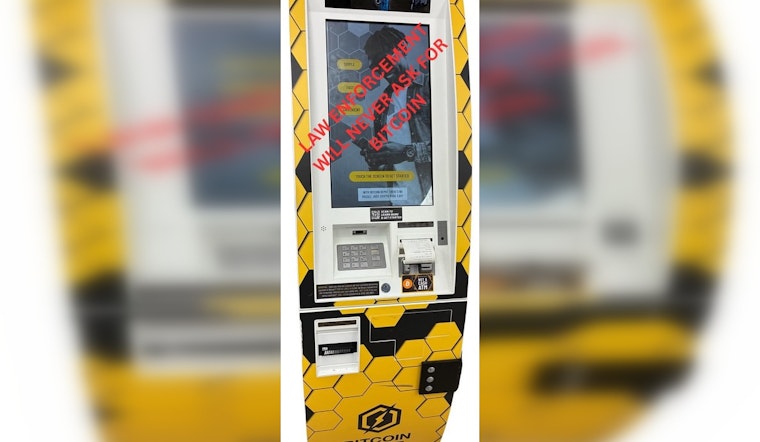
Cleveland County residents are being hit with a new twist on an old con, as callers posing as sheriff’s deputies threaten people with arrest over supposed missed jury duty or outstanding warrants, then demand instant payment through cryptocurrency kiosks, gift cards, or other electronic methods, according to local officials.
In a Facebook post on Wednesday, the Cleveland County Sheriff’s Office said scammers have used the names of real deputies and directed would-be victims to pay at Bitcoin ATMs around the county, according to the Cleveland County Sheriff’s Office. The agency stressed that neither the sheriff’s office nor the courts will ever accept bitcoin or other electronic payments to clear up warrants or jury issues and urged anyone who gets such a call to hang up and contact law enforcement directly.
How the scam works
Local reporting shows the scheme usually starts with an urgent phone call from someone claiming to be a deputy or court official, accusing the target of skipping jury duty or having an active warrant. From there, the pressure ramps up, with the caller insisting the only way to avoid arrest is to pay immediately using gift cards, cash apps or cryptocurrency. In some cases, scammers have even shown up at people’s doors with fake paperwork.
Court officials note that legitimate jury notices arrive by U.S. mail and do not include on-the-spot payment demands, News 9 reported.
Why scammers ask for Bitcoin
Federal prosecutors and the FBI have documented similar operations in which scammers send forged court documents and instruct victims to use cryptocurrency kiosks, since crypto payments are difficult to trace and even harder to recover once sent. The U.S. Department of Justice has advised victims to stop communicating with suspected scammers and to report these incidents to the FBI’s Internet Crime Complaint Center, noting that the same playbook has surfaced in fraud campaigns around the country.
What to do if you are targeted
If you get a call like this, hang up immediately, do not share any bank or personal information, and refuse any instructions to visit an ATM or crypto kiosk. Instead, verify the claim by calling the sheriff’s office or the county court clerk using phone numbers listed on their official websites, not the number that showed up on your caller ID or was given by the caller.
To report a scam or ask for help, contact the Oklahoma Attorney General’s Consumer Protection Unit at 1-833-681-1895 or [email protected], and consider filing a complaint with the FBI’s IC3 portal for internet-related crimes.
Legal consequences
Posing as a peace officer or using fake warrants to squeeze money out of people is a crime under Oklahoma law. The state’s penal code prohibits false personation and impersonation of public officers, and penalties can range from misdemeanors to felonies depending on what the scammer did and how much money was taken, according to Justia. If anyone shows up at your home claiming to be law enforcement and starts making demands, authorities say you should call 911 immediately instead of complying.
Officials also urge residents to keep call logs, voicemails, texts, screenshots, and any receipts, since those records can help investigators. Share warnings with friends and family, particularly older adults who are often singled out by scammers. If you think you have already lost money, contact your bank right away and report the fraud to local law enforcement, along with state or federal consumer-protection agencies.





