

























































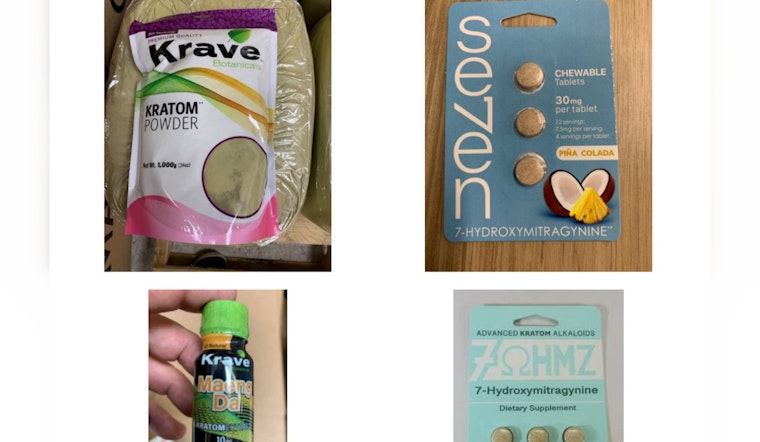
In a recent development that's causing waves across California, the California Department of Public Health (CDPH) has issued a stern warning to retailers and consumers about the risks associated with kratom-derived products and their synthetic derivative, 7-hydroxymitragynine, commonly known as 7-OH. According to the CDPH, these substances are linked to serious health problems, including addiction, overdose, and even death, with six fatal overdoses recently reported in Los Angeles County.
The availability of kratom and 7-OH is misleading to consumers, often sold under the guise of being "safer" alternatives to other opioids for managing pain and other medical issues, but the truth is they're neither safe nor legal for sale for consumption, these products are widely available in places like smoke shops and gas stations, frequently without proper labeling or safety information. Kratom and 7-OH, which might be marketed as dietary supplements or plant alkaloids, have not been approved by the FDA, nor have they been tested for safety, consistency, or effectiveness.
Beyond the inherent dangers of addiction and serious side effects, including seizures and respiratory depression, the CDPH emphasizes the extreme risks when kratom or 7-OH are mixed with prescription meds, alcohol, or street drugs. They've underscored this point by seizing over $5 million worth of these products in their commitment to protect consumers from adulterated and misbranded goods under the Sherman Food, Drug, and Cosmetic Act.
Efforts are ramping up to educate retailers about the illegality of these substances with CDPH partnering with other regulatory bodies like the California Department of Alcoholic Beverage Control (ABC) and the California Department of Tax and Fee Administration (CDTFA), together they are providing compliance education and issuing enforcement actions against businesses that continue to sell kratom and 7-OH products for consumption. Simultaneously, healthcare providers are being briefed on the issue, equipped with clinical recommendations and additional resources.
To the consumers of California, the CDPH reiterates the importance of avoiding kratom-derived or 7-OH products entirely. Urging them to stay informed on the risks of overdose and to have naloxone on hand—a medication that can reverse an opioid overdose—should they witness or experience an overdose themselves. They've also provided resources, including the Poison Control contact and Choose Change California, for those seeking support with opioid use disorders.
Those wishing to report illegal sales of these substances can reach out to the CDPH Complaint Hotline or submit a report online, staying proactive in the battle against unregulated and dangerous products on the streets of California.





