

























































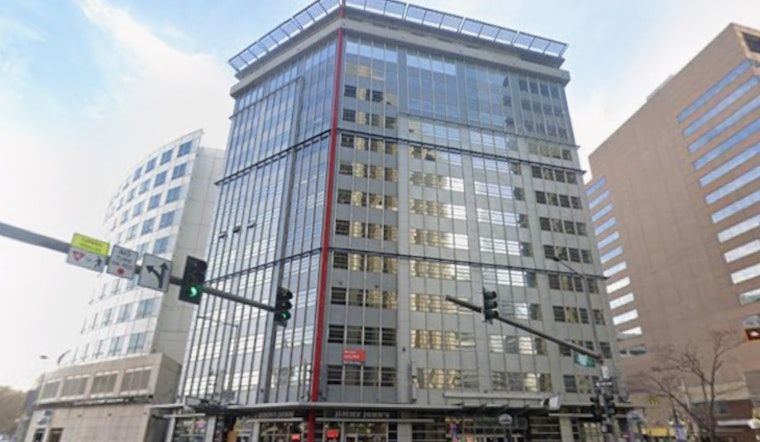
A stubborn coworking tenant high above the 16th Street Mall is putting the brakes on a marquee plan to turn Denver’s midcentury Petroleum Building into hundreds of apartments, even with a 14 million dollar public loan already lined up to help make the deal pencil out.
Venture X, the coworking franchise that occupies the top two floors of the tower at 110 16th St., has told city officials it is not going anywhere, a stance that is now tangled up with the project’s financing and construction timeline.
Paul Sheperd, the local Venture X franchisee, told members of the Downtown Development Authority board this week that he has roughly 10 years left on his lease and no plans to relocate, according to BusinessDen. He also questioned why the city would back a subsidized loan without a concrete relocation plan for a major tenant, the outlet reported.
On the developer side, Tim Borst, part of the team behind the Petroleum Building conversion, said they have floated multiple relocation offers and given advance notice, and that the last letter from Shepherd’s attorneys demanded a payment he characterized as unrelated to actual moving costs, BusinessDen reported. Borst said Venture X is now the only remaining office tenant in the building and that the franchisee’s refusal to engage has caught the ownership group off guard.
What the DDA approved
The Downtown Development Authority has signed off on a 14 million dollar loan to support the Petroleum Building’s adaptive reuse plan, a gap financing award meant to cover roughly 20 percent of the estimated 68 million dollar project cost and help convert 12 office floors into 178 apartments, according to The Denver Gazette.
Denverite reported that the project is in final permitting and that developers expect to break ground in spring 2026, with apartments scheduled to deliver by summer 2027, assuming everything stays on track.
Why a holdout matters
The timing and financing matter because downtown Denver is still swimming in empty office space. The downtown submarket’s vacancy rate hovered near 38 percent at the end of 2025, a number developers routinely cite when arguing that office-to-residential conversions are not just nice to have but necessary, according to Bisnow, which cited CBRE data.
That backdrop is a big reason the DDA and other public agencies have leaned into gap financing, hoping to nudge projects like the Petroleum Building conversion across the finish line rather than letting aging towers sit half empty.
Where Venture X fits in
Venture X’s Denver outpost lists its address as 110 16th Street Mall and highlights its perch on the upper floors of the Petroleum Building, according to the operator’s site. The location is marketed as a top-floor coworking hub with views - exactly the kind of premium setup a franchisee would be reluctant to surrender without a compelling alternative.
That identity helps explain the tension: what the developers see as a key step in downtown’s reinvention is, for one tenant, a thriving business that happens to be standing in the way.
Amenities and the timeline
Plans for the revamped tower call for restored historic facades and a slate of resident amenities, including a fitness center, gardening spaces, and a rooftop dog park and lounge, according to The Denver Gazette. On paper, it is the kind of glossy package cities love to tout when they talk about “reimagining” downtown.
But those amenities, and the contractor schedules behind them, depend on resolving outstanding tenant issues before permits and financing are fully locked in, Denverite has noted. As long as Venture X is staying put on the top floors, the project’s construction choreography gets a lot trickier.
What happens next
The DDA’s loan approval is only one piece of the puzzle. Additional sign-offs, plus a revised construction timetable that accounts for either a negotiated relocation or potential legal remedies, are still needed before work can truly ramp up, according to The Denver Post.
Both the developer group and the tenant say they would rather hash things out across a conference table than in a courtroom. Until they do, though, the Petroleum Building’s transformation from petroleum-era office tower into a residential address remains very much up in the air.




