

























































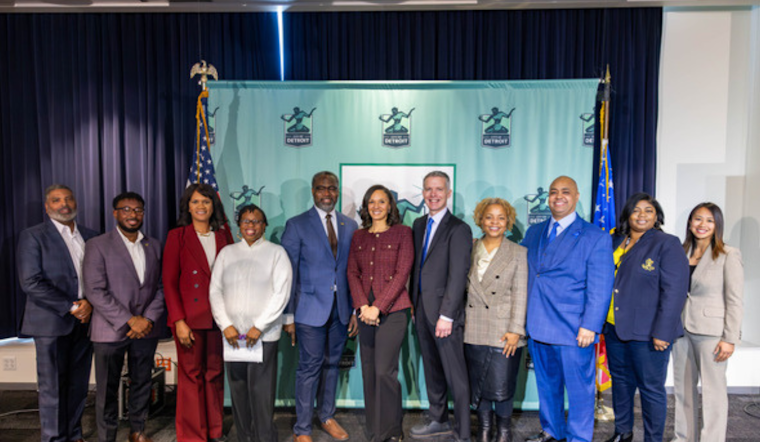
In a bold move to tackle the persistent challenges of poverty and health disparities in Detroit, Mayor Mary Sheffield has appointed Dr. Luke Shaefer, the architect of the University of Michigan’s Poverty Solutions, as the city's inaugural Chief Executive of Health, Human Services, and Poverty Solutions. Dr. Shaefer's mandate will include overseeing an amalgamated entity that brings under its wing the Detroit Health Department, the Office of Immigrant Affairs and Economic Inclusion, and a new Department of Human, Homeless, and Family Services helmed by Benita R. Miller.
Mayor Sheffield's strategy aims to rapidly enhance the quality of life for Detroit residents by ensuring that support services are more streamlined and responsive to the needs of those grappling with poverty. According to a statement obtained by the city's official website, Mayor Sheffield said, per the City of Detroit, “Detroit can’t reach its full potential if families are struggling just to meet their basic needs.” The reorganization is set to create a more coherent, resident-focused approach to delivering services, consolidating various administrative functions that were previously scattered across different city divisions.
Leading the charge, Dr. Shaefer brings to the table his expertise as not just an academic but as an experienced policy advisor. His work in anti-poverty measures has been recognized nationally, including a special counsel role advising Michigan's Department of Health and Human Services, as noted by the City of Detroit. Shaefer, through the Department of Human, Homeless, and Family Services, plans to address the root causes of poverty by prioritizing access to stable housing, secure income, and comprehensive services.
Dr. Shaefer's record speaks volumes; his co-authored 2015 book on extreme poverty in America garnered significant attention and was cited by Time magazine as an influence on policy reforms. Under his leadership, the new department aspires to set a national precedent. "Poverty is the result of systems that fail to serve families as they should–but that means these systems can be reimagined and rebuilt to empower families to lead healthy and full lives," Shaefer told the City of Detroit. This commitment also involves leveraging a partnership with the University of Michigan's Poverty Solutions, bringing a fresh cohort of researchers to inform the city’s strategies with evidence-based analysis.
Benita R. Miller, appointed as Director of the new Department of Human, Homeless, and Family Services, draws upon nearly three decades of expertise in family-centered systems and child welfare. In her remarks to the city’s channel, Miller emphasized the goal of creating a service system that exudes dignity and ensures accessibility. “Families should not have to navigate a maze to get help,” she said, underlining the need for an integrated support network that listens and responds to the community's voices, as cited by the City of Detroit.



