

























































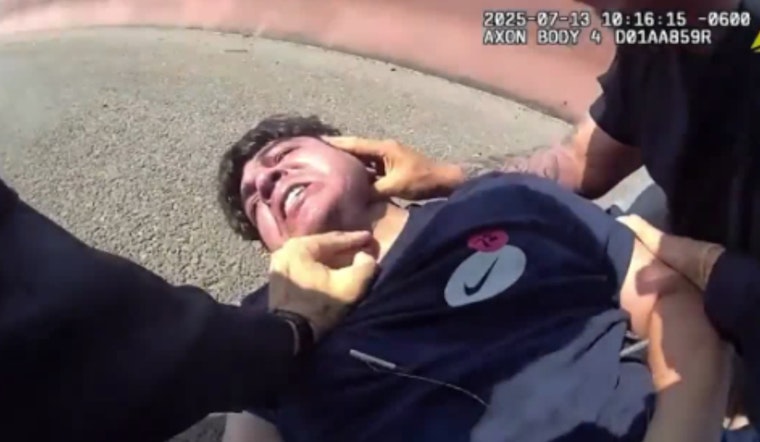
The family of Xavier Hernandez has taken the City of El Paso to federal court, filing a civil-rights lawsuit that claims police used excessive force during a July 13 encounter on Interstate 10 that ended with the 30-year-old dead. The complaint, filed Monday in federal court, follows the release of police body camera footage and an autopsy that classified Hernandez's death as a homicide. The suit names the El Paso Police Department and several officers and says it aims to hold them accountable for how the encounter unfolded.
Federal complaint lays out allegations
Attorneys Robert Melendez and Jeff Edwards announced the lawsuit, saying the complaint accuses officers of tasing Hernandez multiple times, choking him, and using pressure-point techniques while he was unarmed and on his knees. The suit alleges Hernandez was handcuffed and later held face-down with officers kneeling on his back for "nearly ten minutes" before he became unresponsive, according to KFOX. The attorneys say the filing seeks accountability and remedies for Hernandez's family.
"This young man asked for help and he was met with deadly force," Edwards said in comments to KFOX. The complaint further alleges officers applied pressure to Hernandez's neck and that tasers were deployed repeatedly while he was already on the ground, according to the lawsuit. The lawyers and community groups argue the encounter highlights broader gaps in how officers respond to mental-health crises.
Autopsy, body camera and official review
The El Paso County medical examiner ruled Hernandez's death a homicide, listing asphyxia from chest compression during law-enforcement subdual and restraint as the cause, with cocaine toxicity noted as a contributing factor, according to reporting that reviewed the autopsy. The autopsy described multiple abrasions and contusions, and toxicology findings that included cocaine metabolites. Local broadcasters obtained police body-worn camera footage that the department posted, and officials said the case is the subject of criminal and administrative reviews by the Texas Rangers and the department's internal affairs unit, as reported by KVIA/ABC-7.
What police say
The El Paso Police Department has said officers were responding to reports that someone was attempting to jump from a highway barrier and that Hernandez became combative, prompting a taser deployment. Police statements say the initial taser was ineffective and that an off-duty officer and a witness helped restrain Hernandez before he became unresponsive, according to the El Paso Times. The department has not released the names of the officers while parallel investigations continue and has emphasized that the autopsy's use of the term "homicide" is a medical finding, not a legal determination of intent.
Legal implications
The federal complaint alleges constitutional violations and is framed as a civil-rights action under the federal statute 42 U.S.C. § 1983, which allows people to sue state actors for deprivation of rights. That law is the main vehicle for such claims and can support requests for damages and injunctive relief. Defendants in these cases often respond by invoking qualified immunity and contesting the facts. Civil courts apply different standards than criminal or administrative proceedings, so the lawsuit will move on its own timetable even as investigators continue reviewing the July encounter.
Community reaction and next steps
Family members and local advocates say Hernandez was in crisis and argue that the police response exposes weaknesses in crisis-intervention training, organizers and attorneys have said. Community groups held vigils and called for witnesses and video after portions of the body camera footage were released last summer, according to local reporting. The family's lawyers say they will press ahead with the federal case while the Texas Rangers and El Paso police investigators continue their separate reviews.
The filing keeps the case in the public eye and opens the door to civil discovery that could bring depositions, additional video, or internal policy documents into view. It will likely take months for the litigation and the parallel investigations to move forward. For now, the family and El Paso officials are bracing for a legal process that could, over time, provide answers and possibly spur policy changes.




