

























































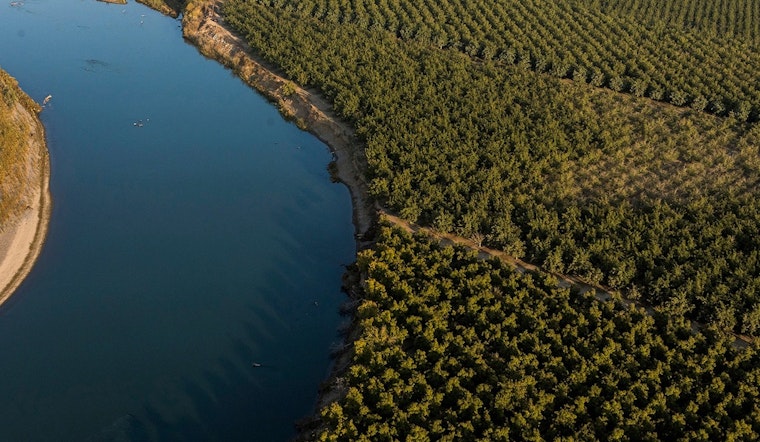
The long-debated Sites Reservoir Project in the hills west of Maxwell just cleared its biggest federal hurdle yet. Yesterday, federal officials signed off on the 1.5 million acre-foot off-stream storage project in the Sacramento Valley, issuing a key Record of Decision that backers say finally moves the proposal off the drawing board and toward construction. Supporters argue the reservoir would capture storm flows in wet years and release water in droughts to bolster supplies for farms, cities, and environmental flows across California.
Federal sign-off and what it authorizes
The Department of the Interior announced that the new Record of Decision authorizes the Bureau of Reclamation to move ahead with the selected project alternative and to cover up to 25 percent of total costs, a step federal officials framed as a material move toward actual construction. “Signing the Sites Reservoir Record of Decision represents a federal commitment to move a long-studied water storage project forward,” Assistant Secretary for Water and Science Andrea Travnicek said, according to the Department of the Interior. The department also credited recent operational moves this winter that freed up additional water for the Central Valley, creating more potential supply for projects like Sites.
Where it would sit and what it holds
Instead of damming a major river, Sites Reservoir is planned as an off-stream facility in Antelope Valley, west of the Sacramento River and near the town of Maxwell. The project would rely on existing conveyance canals to move water into a roughly 14,000-acre basin, where it could be stored and later released. Designed for about 1.5 million acre-feet of capacity, the reservoir is pitched as a way to bank water in wet periods and tap it in dry years for agricultural, municipal, and environmental uses. That operational concept, along with a scaled redesign that emerged during years of review, is outlined by the Water Education Foundation.
Money and contractors
On the financing front, the Sites Project Authority reported that the California Water Commission voted to add $218.9 million in Proposition 1 inflationary funding, bringing the project’s maximum eligibility to about $1.094 billion and deepening the state’s financial stake in the plan, according to the Sites Project Authority. That bump in funding is meant to help keep the multiyear effort from being eroded by rising construction costs.
Meanwhile, the Authority selected Barnard Construction as construction manager at risk for the reservoir and associated roads package, a decision that drew protests from local labor groups even as the board approved preconstruction work. Those milestones are intended to keep the project’s schedule intact, with leaders saying that early work and contractor input are expected to help push the project toward a late-2026 construction start, according to California Construction News.
Pushback from tribes and conservationists
Opposition has hardly gone quiet. Tribal leaders and conservation groups warn that diverting high flows from the Sacramento River could damage salmon runs and flood important cultural sites. Save California Salmon has labeled the proposal “a wolf in sheep’s clothing” and criticized the latest funding shift as throwing more money at the wrong solution.
At the same time, a coalition that includes Friends of the River, the Center for Biological Diversity and the California Sportfishing Protection Alliance has filed California Environmental Quality Act legal challenges, arguing that the project’s environmental review understates harm to rivers, fish and cultural resources. Critics in those groups have pushed alternatives such as groundwater recharge and habitat restoration as potentially cheaper and less damaging ways to build water resilience across the state, the California Sportfishing Protection Alliance notes.
What’s next
The new Record of Decision clears a major paperwork hurdle, but Sites Reservoir is still far from a done deal. The project must lock in full financing, secure remaining permits and get through the pending legal challenges before heavy construction equipment shows up in the valley.
Project officials say the federal decision sets the framework for construction through partnerships and procurement, and the Sites Project Authority is still publicly aiming to break ground in late 2026 and start operations in the early 2030s, according to the Sites Project Authority. Federal officials have also highlighted recent operational gains this winter that they say made more water available for capture by storage projects such as Sites, as detailed by the Department of the Interior.




