

























































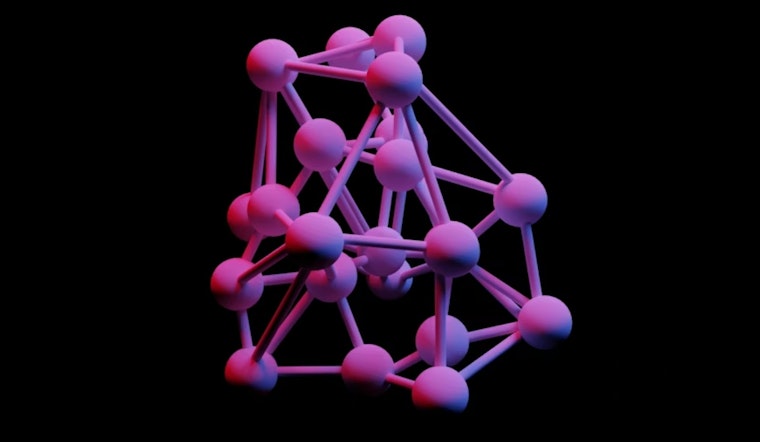
In what could be a substantial leap forward in pharmaceutical research, a team of international scientists from The Ohio State University and the Indian Institute of Technology Madras has made headway with a new artificial intelligence tool designed to streamline the drug discovery process. The innovative AI framework, named PURE (Policy-guided Unbiased REpresentations for Structure-Constrained Molecular Generation), has the potential to significantly reduce the time needed to develop new drugs, which traditionally can take over a decade and cost billions of dollars.
As presented in the Ohio State News report, the AI tool distinguishes itself by using real-world laboratory synthesis as its template, thus generating molecules that are not just theoretically promising but also practically viable for synthesis. PURE moves beyond conventional AI methods by integrating self-supervised learning with policy-based reinforcement learning, simulating the chemical reactions a scientist would perform.
This approach to molecular generation fights one of the most pressing challenges in drug discovery: the gap between digital dream designs and tangible, synthesizable compounds. According to Ohio State Computer Science and Engineering Professor Srinivasan Parthasarathy, in a statement obtained by the Ohio State News, "This new framework offers game-changing benefits for early-stage pharmaceutical research, with the capability to identify alternative, more effective drug candidates in the face of resistance and hepatotoxicity." He also highlighted that, besides drug discovery, PURE can hasten the discovery of new materials, marking a stride towards other scientific domains.
Using standard molecule-generation benchmarks, including QED, DRD2, and solubility tests, PURE's capacity to yield diverse molecule structures alongside conceivable synthetic routes showcased its potential. Unlike many other AI models, PURE did so without direct training on these metrics, meaning that it acts as a more universally applicable tool for molecular discovery across various disease types and property objectives.
B. Ravindran and his colleagues at the Indian Institute of Technology Madras, mentioned in the same statement, emphasized the role of reinforcement learning in the framework. "What’s unique about PURE is the way it uses reinforcement learning, not just to optimize specific metrics, but to learn how molecules transform," said Ravindran, in a statement obtained by the Ohio State News. This mirrors the practical approach a chemist takes, considering not just the end product but the sequence of synthesis steps to get there.
The study's implications for both drug discovery and material science could herald a new chapter of innovation where AI serves as a dynamic partner in the laboratory, bringing to life compounds and materials that are both inventive and, importantly, realizable. The full details and potential ramifications of PURE's framework have been elucidated in a recent publication in the Journal of Cheminformatics.



