

























































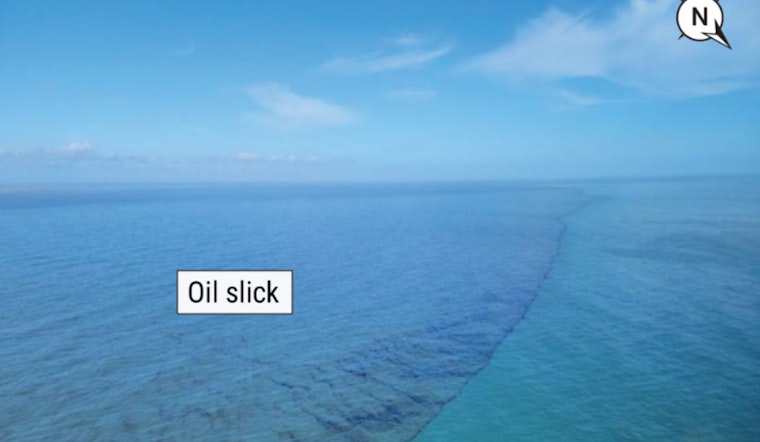
Federal regulators have moved to drop the biggest civil penalty in pipeline safety history on a Houston-based operator after a subsea pipeline leak dumped more than a million gallons of crude into the Gulf of Mexico. The November 15, 2023, failure of an 18-inch Main Pass Oil Gathering line released roughly 1.1 million gallons into a sensitive patch of water off Louisiana, and investigators say a mix of undersea geohazards and slow control-room action turned a bad night into a full-blown disaster. The proposed fine, paired with a matching compliance order, is designed to force technical fixes and new safeguards across the system.
PHMSA Proposes Record Civil Penalty
The Pipeline and Hazardous Materials Safety Administration has proposed a $9,622,054 civil penalty tied to the 2023 Main Pass failure, calling it the largest penalty the agency has ever sought in a pipeline safety enforcement action, according to PHMSA. The notice names Panther Operating Company, LLC as the respondent and includes a proposed compliance order requiring a detailed plan to protect the Main Pass Oil Gathering system against geotechnical and geological hazards. PHMSA said the package targets gaps in leak detection, emergency response, and integrity management that surfaced in the wake of the incident.
What Investigators Found
In its final probe, the National Transportation Safety Board identified the probable cause as a "loss of seal in a collet grip pipeline fitting from pipeline movement caused by geohazards" and concluded that Third Coast’s integrity-management program missed chances to evaluate those threats. Investigators also flagged uncertainty about supervisory control and data acquisition (SCADA) readings, saying that confusion contributed to a delayed shutdown that increased the size of the spill. The NTSB report dates the event to Nov. 15, 2023, and identifies the line as part of the Main Pass Oil Gathering system owned by Third Coast and operated by its affiliate Panther.
Delay In Shutdown Magnified Spill
News coverage of the NTSB findings noted that controllers first spotted pressure irregularities on the night of Nov. 15, but the system was not fully shut down until the following morning. That timeline amounted to nearly 13 hours from the first signs of trouble, according to The Associated Press. The drawn-out shutdown, combined with undersea landslides that damaged a fitting, led to a spill that investigators estimate at about 1.1 million gallons and believed to have caused tens of millions of dollars in environmental damage. Cleanup and response teams then remained in the sensitive Main Pass area for weeks while wildlife and shoreline impacts were assessed.
Third Coast Pushes Back
Third Coast, the Houston-based owner of the gathering system, called the allegations a surprise and said it has been working with regulators to address the incident. In a statement to the San Diego Union-Tribune, a company spokesperson said Third Coast "consistently meets or exceeds regulatory requirements" and will address PHMSA’s concerns. The operator has also reported upgrades to monitoring and leak detection for the Main Pass system since the accident.
Critics Say The Penalty Falls Short
Advocates welcomed PHMSA’s move but quickly argued that the proposed hit may not be big enough to spark broad industry change. "The proposed fine represents less than 3% of Third Coast Midstream’s estimated annual earnings," Pipeline Safety Trust Executive Director Bill Caram said, insisting penalties must make noncompliance more expensive than playing by the rules, according to The Associated Press. Critics also point to the operator’s wider footprint, including interests in roughly 1,900 miles of pipeline and recent large financing, as evidence regulators should push for systemic fixes instead of treating this as a one-off blunder.
Regulatory Next Steps
PHMSA’s enforcement package pairs the proposed civil penalty with a compliance order that would require structural and procedural changes, including focused geohazard evaluations and upgraded leak-detection alarms, the agency said. The NTSB’s recommendations run along the same lines, urging better geohazard monitoring and clearer control-room protocols so controllers are not stuck guessing when data starts to look strange. If PHMSA’s notice survives the administrative process, the operator could face binding requirements along with further enforcement actions that extend beyond the single civil penalty now on the table.
What To Watch
All eyes now turn to Panther’s formal response to the notice and to whether PHMSA holds the line on the compliance order or negotiates alternative remedies. The pace and outcome of that administrative process will determine whether this becomes a landmark enforcement case or a test run for tougher oversight. For Gulf coastal communities and fisheries, the leak is a pointed reminder that aging subsea infrastructure and shifting environmental pressures make up-to-date monitoring and geohazard planning less of a nice-to-have and more of a survival skill.



