

























































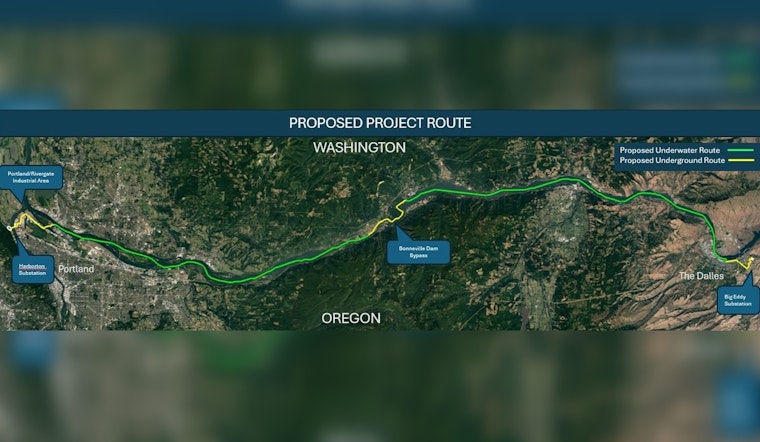
A $1.5 billion plan to run a high-voltage power line under the Columbia River is officially under the federal microscope, and Portland-area residents now have a chance to weigh in. The U.S. Army Corps of Engineers has opened a formal review of the Cascade Renewable Transmission project and is taking public comment, with two virtual meetings set for next Wednesday and Thursday. Developers say the line would carry renewable power west from The Dalles to the Portland area.
Federal Review and Public Meetings
According to the U.S. Army Corps of Engineers, the agency published a Notice of Intent on Jan. 5 and kicked off a 30-day scoping period that runs through Feb. 4, giving the public a chance to help shape the Environmental Impact Statement. The Corps plans two online scoping sessions next Wednesday from 1 to 3 p.m. and next Thursday from 6 to 8 p.m., and it will take oral comments during both meetings.
What the Project Would Do
The Cascade Renewable Transmission project, led by PowerBridge and its partners, is pitched as a new way to move renewable energy across the Cascades and comes with a reported $1.5 billion price tag. If it clears federal review, the line would run from The Dalles to Portland and involve about 78.9 miles of 12-inch HVDC cable buried 10 to 15 feet below the Columbia River bed, with deeper burial at navigation channels, according to the Tri-Cities Area Journal of Business.
Tribes and Conservationists Warn of Harm
Tribal nations and conservation groups are sounding alarms, arguing that trenching under the river could damage critical habitat and treaty-protected fishing grounds. “They want to dig into critical habitat, habitat that’s needed for … salmon and steelhead, for Pacific lamprey,” Julie Carter of the Columbia River Inter-Tribal Fishing Commission said, as reported by Cascade PBS. Shipping interests are also wary, warning that construction could disrupt routine barge fuel runs between Portland and the Tri-Cities, according to the Washington State Standard.
Permits and Timeline
The Corps says the proposal will need a Department of the Army permit, Section 408 permission and real-estate outgrant or outgrants, and it has already concluded the project may significantly affect the human environment, which triggered the full Environmental Impact Statement process. The agency’s project page outlines a tentative schedule from scoping to a Draft EIS, with a Draft EIS notice targeted for winter 2026/2027 and a Record of Decision by winter 2027/2028, although those dates are still only preliminary, according to the U.S. Army Corps of Engineers.
Developer Response and Next Steps
PowerBridge says it has already supplied additional details to federal reviewers and is bracing for a roughly two-year federal permitting process. The company previously turned down an offer of expedited federal processing last year and opted instead for the standard, more drawn-out review, as reported by the Washington State Standard. The current scoping period closes Feb. 4, and the Corps is accepting written comments by email, mail or voicemail. Members of the public can reach the project team at [email protected].



