

























































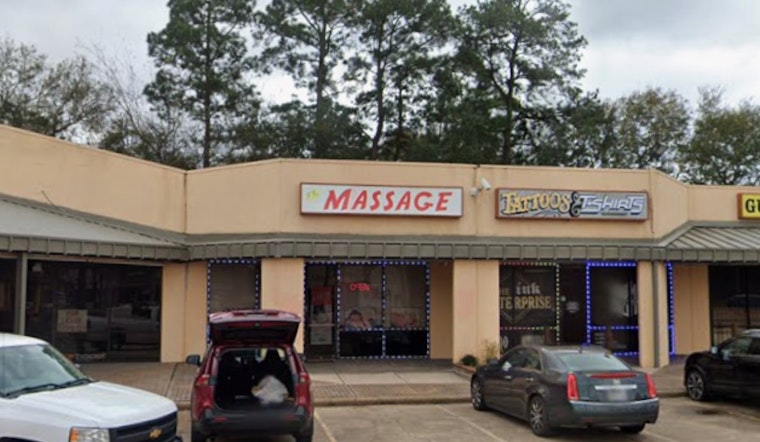
A Hurst massage school that was supposed to be training future therapists is now shut down, its paperwork under the microscope and its leaders sidelined from the industry.
The Texas Department of Licensing and Regulation has revoked the license of Elm Health Institute, a massage school in Hurst, and pulled the massage-therapist and instructor credentials of two people tied to the program. Regulators say the school submitted falsified academic and internship records and that multiple graduates or students ended up working at illicit massage businesses. The named individuals are barred from practicing or operating massage schools in Texas while the administrative action plays out, part of a broader state crackdown on schools and parlors linked to suspected human trafficking.
In a press release, the Texas Department of Licensing and Regulation said it revoked the school license and the massage therapist and instructor licenses of Petrus Evers (also known as Bas or Petrus Sebastian Evers) and Jianwen Ma (also known as Jenny or Jian Ma). TDLR Executive Director Courtney Arbour said the agency "will take immediate action when we find schools that are not adhering to state law." The department said the revocations are effective immediately and prohibit the two from working in the massage industry in Texas while the administrative case moves forward.
What Investigators Found
When state investigators dug into Elm Health Institute’s records, the numbers did not line up. Attendance logs allegedly showed students marked as being in two places at once, listed as attending in-person and online classes on the very same days. At least one student told officials she had never attended in-person classes at all.
Regulators said academic and internship paperwork submitted with students’ license applications appeared to have been falsified. That is a direct conflict with Texas rules, which require that at least 250 hours of a 500-hour program be completed in person, along with a 50-hour in-person internship. These investigative details were reported by the Fort Worth Star-Telegram.
Connections to Illicit Massage Businesses
The department said it had "identified many cases" in which Elm Health Institute graduates or students were working at illicit massage establishments that had been closed for evidence of human trafficking, according to the Gilmer Mirror. Investigators flagged additional ties between the school’s operations and the illicit massage industry, which the agency says helped justify the emergency enforcement action.
Regulators warned that falsified training and internship records can fast-track unqualified people into hands-on, consumer-facing roles, increasing safety risks for clients who may assume everyone in the treatment room met state standards.
State Law and Enforcement Trend
Under a law passed in 2023, the state gave TDLR’s executive director authority to issue emergency orders to close massage establishments when there is reason to believe human trafficking is occurring. That change has given regulators a rapid-response tool instead of forcing them to wait out a lengthy case before shutting a business’s doors.
The legislation and the department’s early use of that emergency closure power are detailed by Houston Public Media, and similar enforcement actions have been surfacing across Texas. Hoodline has also chronicled related closures and school sanctions in recent months, underscoring a broader push by regulators to disrupt illicit operations wherever they find them.
Students and clients who are worried about training, records, or licensing are urged to hang on to receipts and documentation and to verify licensure status with the department while the administrative process continues. TDLR said formal orders and supporting documents will be posted as the case progresses, and affected parties may have an opportunity to contest the agency’s findings in an administrative hearing.





