

























































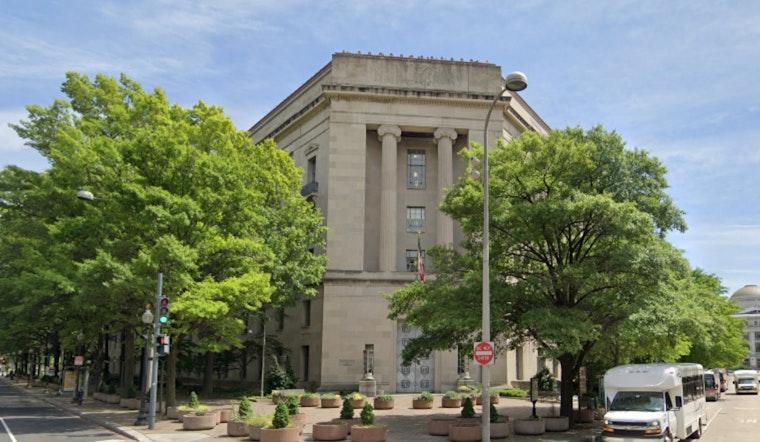
Nevada Attorney General Aaron Ford is asking a federal judge to toss the Justice Department's lawsuit that demands the state's full, unredacted voter registration list, turning a paperwork dispute into a high-stakes courtroom fight. In a motion filed Jan. 28, Ford's office pushes back on federal demands for sensitive data fields, including dates of birth, drivers license numbers and the last four digits of Social Security numbers, arguing that handing over that information would collide with federal and state privacy protections. The filing targets the DOJ complaint the government lodged on Dec. 11 against Secretary of State Francisco "Cisco" Aguilar and asks the court to block any order that would force Nevada to disclose confidential voter data, saying the department has not provided the specific "basis and purpose" federal law requires for such a broad sweep of information.
According to the Las Vegas Review‑Journal, Nevada says the Justice Department first requested voter registration records in June, then returned in August with a follow-up request that sought full, unredacted data fields. Federal officials have said they want the unredacted lists to enforce the National Voter Registration Act and the Help America Vote Act, according to the Justice Department.
What Nevada's Motion Argues
In its brief, Nevada zeroes in on Title III of the Civil Rights Act of 1960, the statute the DOJ is using as its hook, and argues that provision does not authorize a wholesale transfer of personally identifying voter data to Washington. The state says the law requires the department to spell out a concrete "basis and purpose" before demanding records and that the DOJ has fallen short of that standard with its sweeping request. Those arguments are detailed in court filings and docket entries compiled by the Civil Rights Litigation Clearinghouse.
Privacy And Security Concerns
State officials are also leaning hard on privacy and security concerns, warning that turning over sensitive data fields could create fresh risks for Nevada voters. Their alarm is not hypothetical. A statewide cyberattack last year knocked many government services offline and highlighted gaps in the state's digital defenses, as reported by the Nevada Current. In that context, Aguilar has pressed the federal government to explain how any voter data would be secured and used, telling local reporters the demand was "not a normal request," according to 2 News.
Court Rulings Elsewhere Could Matter
Nevada is not the only battleground in this fight over voter data, and state lawyers are pointing to early wins elsewhere. In mid January, a federal judge in California dismissed a similar Justice Department lawsuit and labeled the department's request "unprecedented and illegal," a choice of words that did not go unnoticed by other states watching from the sidelines. As detailed by Stateline, judges in Oregon and California have signaled skepticism about the DOJ's approach, and Nevada is hoping that line of decisions will bolster its own defense.
Case Timeline And Who's Weighing In
The Justice Department filed its Nevada lawsuit on Dec. 11, 2025. The case, United States v. Aguilar, No. 3:25‑cv‑00728, is pending in the U.S. District Court for the District of Nevada, and it is already drawing outside interest. Court records compiled by the Civil Rights Litigation Clearinghouse show the government lodged its complaint in December and that multiple civil rights groups, including the ACLU of Nevada, have moved to intervene. Local coverage indicates that both the attorney general's office and the Justice Department have declined to go beyond their written filings for now, according to Fox5 Las Vegas.
Legal Implications
At the center of the case is a relatively narrow but powerful question. Can the U.S. Attorney General rely on Title III of the Civil Rights Act to compel states to hand over personally identifying voter data without laying out a more specific purpose, or does that statute stop short of authorizing such deep access to state voter files. Legal observers say the recent California decision could become a strong precedent for states that want to resist broad federal demands. If courts side with Nevada, states could keep protected data fields shielded under their own confidentiality laws. If they side with the DOJ, federal orders could pry loose information many states treat as confidential, reshaping how voter privacy and election administration are balanced. As noted by Stateline, the resulting rulings may guide how other district courts apply long standing privacy statutes in similar clashes.
Aguilar has framed the Nevada dispute squarely as a privacy fight, warning that the request represents federal overreach, calling it "not a normal request" and arguing that it could jeopardize voters' security, as reported by the Las Vegas Sun. For now, there is no hearing date on the calendar and the case remains in its early stages, according to the Las Vegas Review‑Journal.





