

























































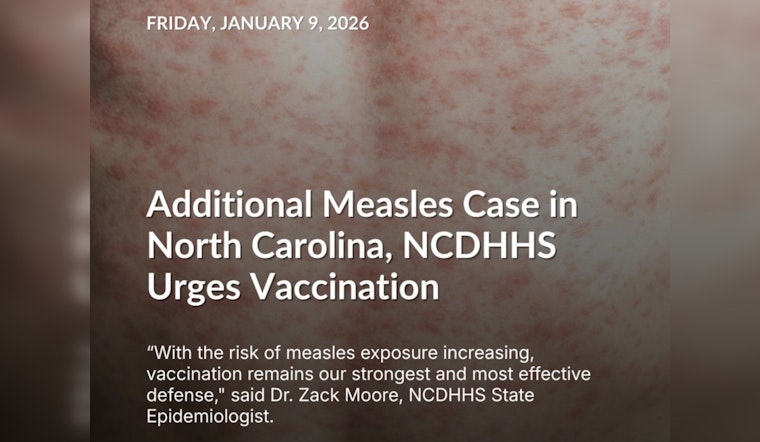
The North Carolina Department of Health and Human Services is reporting a rise in measles cases across the state. A newly confirmed case in Rutherford County brings the total to five since late December. While the patient’s details remain private, NCDHHS has notified individuals who may have been exposed to the virus.
In response to the rising cases, NCDHHS is emphasizing vaccination, urging everyone over the age of one who has not yet been immunized to get the measles vaccine. “With the risk of measles exposure increasing, vaccination remains our strongest and most effective defense,” Dr. Zack Moore, NCDHHS State Epidemiologist said in a press release. The measles virus can remain in the air for up to two hours after an infected person has been present, highlighting the need for prompt preventive measures.
The measles virus, which spreads easily, can cause symptoms such as fever, cough, and a rash, usually appearing seven to fourteen days after exposure. NCDHHS advises that laboratory testing is not necessary unless symptoms develop, but urges anyone showing potential signs of the illness to contact health authorities promptly. Individuals experiencing symptoms are also advised to limit contact with others and inform any health facility they plan to visit to reduce the risk of transmission.
NCDHHS is preparing for additional measles cases, as no known source of exposure has been identified for the latest patient, indicating the virus may be spreading undetected within the community. Neighboring South Carolina has also seen a sharp increase, reporting 99 new cases over the past three days. Nationwide, 2,144 measles cases were recorded last year, with CDC data showing that approximately 90 percent of unvaccinated individuals exposed to the virus become infected. The majority of cases continue to occur among those who have not received the vaccine.
North Carolina residents seeking information on their immunity or looking to get vaccinated can access resources from the health department, including a measles immunity checker and guidance on obtaining vaccines from local providers or health departments. Ensuring vaccination for both adults and children is a key step in preventing the spread of the virus and protecting the community.





