

























































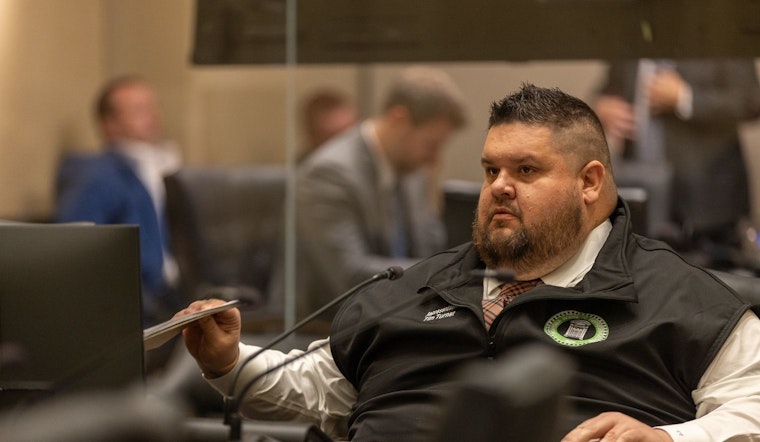
On the legislative horizon, Rep. Tim Turner of Kinta has positioned two bills with an eye toward reinforcing Oklahoma’s defenses against external dangers. The focus of the bills registers clearly - one is to bolster punishments for felony offenses linked to foreign terrorist groups, while the other seeks to crack down on illegal land ownership by non-citizens applying their plots for felonious intent.
"Oklahoma welcomes those who have come to our country legally and who are willing to abide by the laws of our land," Turner articulated, having a message for those harboring more nefarious aspirations, "But those who are here to further a terrorist cause, to harm our citizens through drug or human trafficking or in any other manner, or who illegally purchase our land with an eye to siphon our resources and profits, should know that we will punish them to the full extent of the law," the Oklahoma House of Representatives reported.
The proposed House Bill 3764 would mandate that any conviction for a felony offense committed in support of a designated terrorist group result in doubled prison sentences and fines. Filed ahead of the legislative session, the bill earmarks an urgency in the state's response to a reported batch of 37 foreign fugitives apprehended on charges of smuggling and trafficking, one of whom was detected in Oklahoma's own Western District.
Complementing the fight against terrorism, Turner's House Bill 3765 targets illegal foreign land ownership. In the crosshairs are aliens or non-citizens found to be owning land through indirect means and utilizing this land to perpetrate state felonies. The bill, being shaped as a separate felony offense, carries the weight of possible imprisonment and hefty fines upon conviction, coupled with the risk of property forfeiture. Acknowledging the existence of laws that currently govern land ownership by outsiders, Turner proposes yet another brushstroke in the state's legal landscape.
With an emergency clause attached to both, the bills could potentially rocket into effect post-signature should they muster adequate legislative support. The proposed measures will be on the legislative docket for the Second Regular Session of the 60th Legislature, which convenes on February 2, giving state lawmakers a fresh chance to evaluate their merit.




