

























































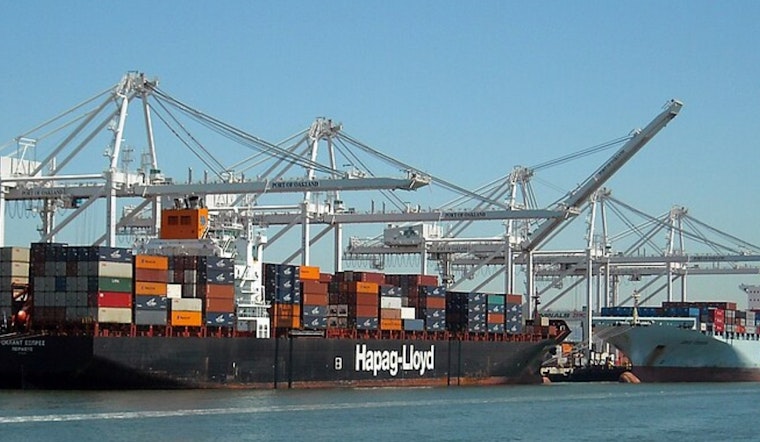
On the heels of a year marked by trade challenges, the Port of Oakland is seeing signs that could point to market stability. The latest numbers from the Port indicate a 4.1% decrease in year-over-year trade volume, which is seen as a relatively positive sign, especially considering the concerns last year about the tariffs imposed by the Trump administration on some of the port's most significant trading partners. In a statement, Port of Oakland Maritime Director Bryan Brandes noted, "Export strength continues to be a key driver for Oakland," as reported by The Mercury News.
The 4.1% decline observed in November was less alarming than what some officials and economists had anticipated. Shipments are now being consolidated into larger loads, resulting in a 8.4% year-over-year reduction in vessel calls, with only 76 calls made in November. Despite the drop in vessel calls, there's an emphasis on efficiency. As the port remarked, fewer calls, paired with higher average cargo per vessel, are helping to maintain the Port's throughput.
In terms it actual cargo numbers, Oakland's port handled 174,239 twenty-foot equivalent units (TEUs) in November 2025. Although this represents a decline, loaded exports increased by 3.3% year-over-year, reaching 68,824 TEUs, according to details shared by the Port of Oakland. This upward trend in exports suggests continued demand for California's agricultural goods and the region's strength in refrigerated commodities, reinforcing the port's significant role in U.S. trade.
However, on the other hand, loaded imports did not fare as well, showing a 9.3% year-over-year decrease, with only 73,092 TEUs processed in November. Brandes emphasized, per the Port of Oakland, "Even as the market recalibrates, our exporters are moving goods consistently, and efficient terminal operations are supporting balanced cargo flows and reliable service for our customers." This focus on efficiency appears to be an adaptive response to the global shipping industry's evolving landscape, where carriers are navigating larger vessels and service consolidation, as noted by the Port of Oakland.





.jpg)