

























































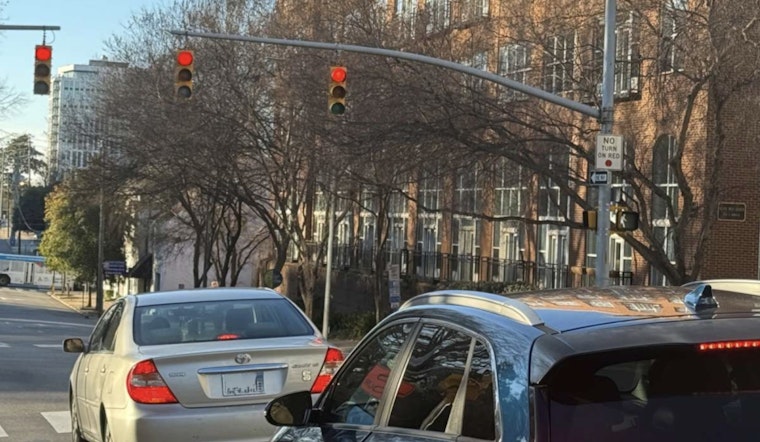
Raleigh is testing a new approach to managing traffic congestion through an AI pilot program aimed at optimizing traffic light timing and enhancing road safety. According to the CIty of Raleigh, the program analyzes real-time video from traffic cameras, converting it into data while neither storing the video nor collecting any identifying information.
As part of the pilot program, the AI system is analyzing data from around 12 cameras, even though the city has more than 200 in operation. Jim Alberque, the IT Manager leading the project, explained that the goal is to make information available instantly to improve signal timing. According to Alberque, real-time video from traffic cameras is being converted into data for analysis. Previously, Transportation Manager Jed Niffenegger noted, staff manually counted traffic at intersections using clipboards—a process the AI system aims to streamline.
The AI system could offer significant cost savings. Transportation Manager Jed Niffenegger noted that, for example, a 1-percent improvement in signal timing along a two-mile stretch of Capital Boulevard with six signals could save tens of thousands of dollars per day. In a growing city like Raleigh, where widening roads is not always feasible, focusing on optimizing intersections allows officials to make more efficient use of existing road capacity.
Raleigh officials hope that the pilot program’s adjustments could lead to wider adoption, helping to reduce traffic congestion and improve safety at intersections. Transportation Manager Jed Niffenegger explained that the system provides data in real time to optimize traffic signals. By leveraging this technology, the city aims to make more efficient use of existing road infrastructure, potentially serving as a model for other cities seeking smarter traffic management solutions.





