

























































Researchers at the Department of Energy’s Oak Ridge National Laboratory (ORNL) have pressed the fast-forward button on plant research by significantly boosting computer processing speeds while reducing memory usage. In a recent breakthrough, scientists are tapping into the capabilities of the world's first exascale supercomputer, Frontier, to power an AI foundation model that can accelerate the improvement of crops for bioenergy and food production.
Per a news release from ORNL, this optimized processing technique—named Distributed Cross-Channel Hierarchical Aggregation (D-CHAG)—slashes the time needed to analyze plant data, a task deemed critical in assessing plant health and spotting diseases early. With hyperspectral imaging generating copious amounts of data, capturing intricate details about plant responses to their environment, traditional image processing consumed excessive time and memory. Not so with Oak Ridge's new method, which speeds up this analysis more than twofold and uses 75 percent less memory.
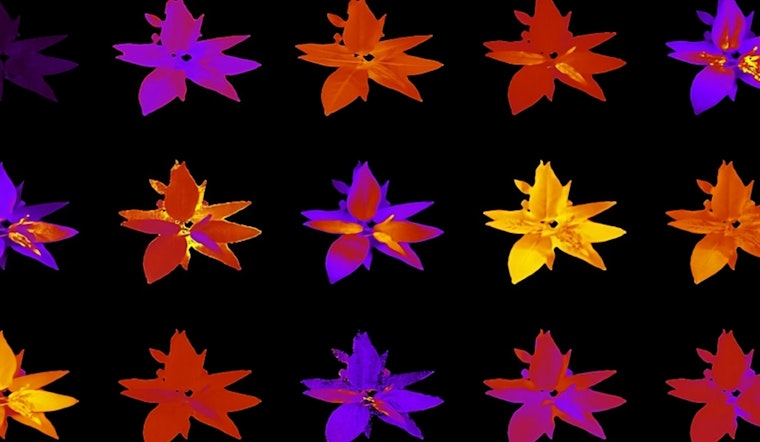
Scientists at ORNL’s Advanced Plant Phenotyping Laboratory (APPL) are on board with the evolution of plant research, leveraging D-CHAG to dissect hyperspectral images taken by robotic systems. This technique enables distributed tokenization where the analytical workload is shared across multiple GPUs, ensuring that no single processor is overwhelmed. Following this, a hierarchical aggregation process stitches this information efficiently together. Consequently, larger hyperspectral datasets can now be managed without compromise, aiding in the extraction of vital plant physiology patterns. "This project demonstrated a solution to the bottleneck that can develop when you have a very large number of parameters, such as hyperspectral data, and need to scale up into foundation models," said Aristeidis Tsaris, a research scientist at ORNL, in a statement obtained by ORNL.
The integration of D-CHAG into plant research promises to play a significant part in national projects like the DOE Genesis Mission and the Orchestrated Platform for Autonomous Laboratories (OPAL). According to Larry York, a senior staff scientist at ORNL, "D-CHAG helps plant scientists quickly accomplish tasks like measuring plant photosynthetic activity directly from an image, replacing laborious, time-intensive manual measurements." In similar statements obtained by ORNL, York anticipates refining the model further to predict photosynthetic efficiency in plants based on the images captured.
In tandem with efforts to advance AI and robotics within laboratory contexts, this leap in computational efficiency stands to benefit farmers and plant breeders looking to monitor crops and select varieties with desirable traits more effectively. Such efficiencies paved by ORNL's work on D-CHAG could yield vital developments in new crop strains better suited for various environmental challenges. As the science community looks ahead, the ability to process such detailed plant data at a rapid pace will not only boost agricultural practices but could also foster the discovery of beneficial plant compounds for broader applications, including medicine and bioengineering.
Contributions to the research came from multiple ORNL scientists, like Xiao Wang, Isaac Lyngaas, and others, and were supported by the Center for Bioenergy Innovation as well as ORNL laboratory-directed research and development funding. Committed to enhancing America's energy innovation, global competitiveness, and security, the research aligns with the goals of DOE’s Genesis Mission, a vision aimed at harnessing the power of AI to transform scientific discovery and problem-solving on a national scale.



