

























































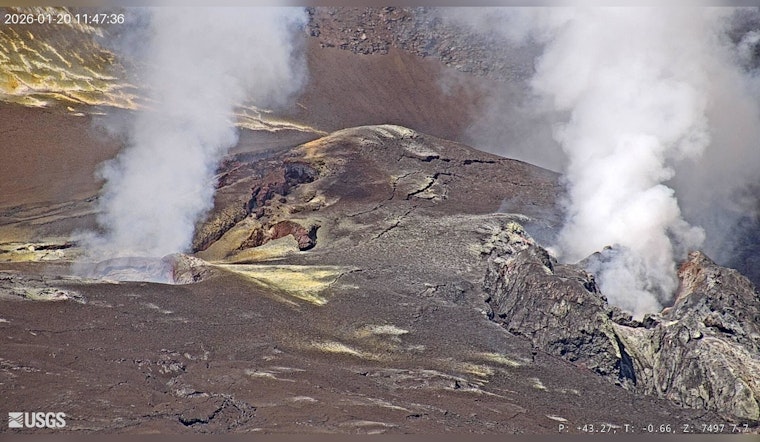
The serenity witnessed at Kīlauea's summit may soon be disrupted, as scientists have projected the potential commencement of lava fountaining within the next 48 hours. Through monitoring models employed by the observatory, the awakening of the Hawaiian volcano seems eminent. This anticipated geological display has captured the attention of both specialists at the Hawaiian Volcano Observatory (HVO) and residents on the Big Island, according to Big Island Now.
Since late December of 2024, Kīlauea has presented an episodic behavior, now in a quiet period since its 40th episode, which began and then ceased last Monday, January 12. The HVO has been closely observing signs of volcanic tremor, along with a persistent luminescence from the crater's southern vent, signaling an increment in volcanic activity. A weaker glow has also been intermittently visible from the north vent, captured on the observatory's webcams, and suggests an underlying unrest ready to potentially manifest visibly at any moment, according to a report from Maui Now.
Furthermore, earthquake swarms have been detected beneath the southeastern section of Halemaʻumaʻu crater. Two distinct clusters of seismic activity were recorded on the afternoon of Saturday, January 17, and the early morning of Sunday, January 18. These earthquakes, linked to the movement of magmatic pressures at the summit, contribute to the complexities of forecasting the timing and intensity of the next eruptive episode.
The HVO continues to rigorously monitor the activity of Kīlauea, which has been erupting intermittently since December 23, 2024. These eruptions are primarily sourced from two vents within the Halemaʻumaʻu crater. Past episodes have been relatively brief, typically concluding in less than 12 hours, and followed by pauses that can extend to several weeks. To ensure safety and awareness, the Hawaiian Volcano Observatory operates in partnership with Hawaiʻi Volcanoes National Park and the Hawaiʻi County Civil Defense Agency to assess and communicate the potential risks posed by the geological unrest. For those seeking detailed information on the earthquake patterns, the US Geological Survey-Hawaiian Volcano Observatory Interactive Earthquake Map of Hawaiʻi is available to the public, and short updates may be posted on the HVO website as the situation develops.





