

























































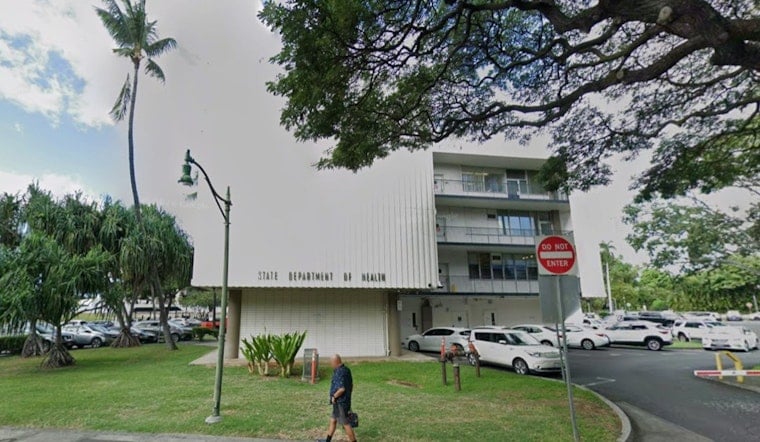
A member of the military based in Hawaiʻi has tested positive for cyclosporiasis, marking the state's fifth case of the intestinal parasite infection in 2026. State health officials say the case appears to be travel-related and has no known connection to the four other cases confirmed or suspected in Hawaiʻi this year.
The Hawaiʻi State Department of Health announced the finding in a post confirming the diagnosis, which was made after the service member was tested in Hawaiʻi. According to the department, the military member had traveled either to a U.S. state that reported increased cyclosporiasis cases or internationally to a country where the disease is endemic before falling ill, though it remains unknown per the DOH investigation whether the infection was actually acquired during that travel or after returning to the islands. The department is still investigating this fourth confirmed case alongside a fifth, probable case, and has said the two have no known contact or other direct connections between them, according to Maui Now.
In total, Hawaiʻi has now logged five cyclosporiasis cases this year — four confirmed and one probable — and none of them are connected to one another. The first case involved a nonresident visitor whose infection was acquired outside Hawaiʻi, while the second and third cases involved Hawaiʻi residents who had traveled internationally. The fourth is the newly confirmed military case, and the fifth remains under investigation as a probable case with no known epidemiological link to any of the others.
What the Hilo Wastewater Signal Does — and Doesn't — Mean
Separately, the state health department detected Cyclospora at low levels in wastewater at the Hilo Wastewater Treatment Plant, a facility that serves roughly 32,500 people. The detection was made through metagenomic sequencing confirmed by the University of Missouri, a technique that scans environmental samples for genetic material from multiple organisms at once. That method can pick up trace genetic material from a single infected person or even a transient traveler passing through, which is why the same report stresses that the wastewater hit does not identify a source of infection, does not indicate any relationship to the confirmed or probable cases, and does not establish that Cyclospora infection is actively present in the Hilo community.
The Hilo plant is currently the subject of a $337 million rehabilitation and replacement project that broke ground in July 2025, after the facility had operated under a federal Environmental Protection Agency administrative consent order tied to past Clean Water Act violations and discharge incidents, according to the Hawaii County Department of Environmental Management. That upgrade is a separate infrastructure matter from the current disease investigation, but it underscores the scale of the system now under closer scientific watch.
No Link to the Mainland Lettuce Outbreak
None of Hawaiʻi's cases are tied to the massive multistate Cyclospora outbreak unfolding on the mainland, which had grown to 9,481 laboratory-confirmed illnesses, 398 hospitalizations, and two deaths across 17 states as of August 13, according to the Centers for Disease Control and Prevention. That outbreak has been linked to iceberg lettuce contaminated at Taylor Farms de Mexico's central Mexico facility, prompting the company to recall all iceberg lettuce sourced from that facility and distributed between June 29 and July 16 across 31 states.
Federal officials confirmed the recalled lettuce was never distributed or sold in Hawaiʻi, and all of the product's best-by dates have since passed. The seasonal timing lines up with a broader national pattern: cyclosporiasis cases in the U.S. typically rise every year between May and August, often driven by imported produce such as berries, basil, cilantro, and bagged greens, per the CDC.
Symptoms, Treatment, and When to See a Doctor
Cyclosporiasis causes frequent, watery diarrhea and is caused by the parasite Cyclospora cayetanensis. People become infected by consuming food or water contaminated with the parasite, and symptoms typically appear anywhere from two days to two weeks after exposure, usually surfacing around one week in. Left untreated, symptoms can drag on for several weeks or longer, but the illness is treatable with a prescription antibiotic combination, and the CDC notes that clinicians must specifically request Cyclospora testing since standard stool cultures routinely miss the organism.
Importantly, cyclosporiasis is not typically spread directly from person to person. The parasite's eggs must mature outside the human host in the environment — a process that takes one to two weeks — before they become infectious, meaning casual contact with an infected individual, including a service member on base, poses no transmission risk. Hawaiʻi's Department of Health says the public risk in the state remains low at this time, though it will continue monitoring for additional cases and working with healthcare providers and other public health partners. Anyone experiencing prolonged or severe diarrhea is encouraged to seek medical care, and healthcare providers are asked to report suspected cases to the department, since cyclosporiasis is a reportable communicable disease.
Hawaiʻi's situation echoes concerns raised elsewhere this summer, including Utah's own cluster of mystery cases and surges reported in North Carolina and Oklahoma, all unfolding against the backdrop of the same national outbreak. Federal, state, and local health officials continue to investigate the multistate Cyclospora outbreak as it evolves, even as Hawaiʻi's five cases so far remain isolated, travel-linked incidents without evidence of community spread.



