

























































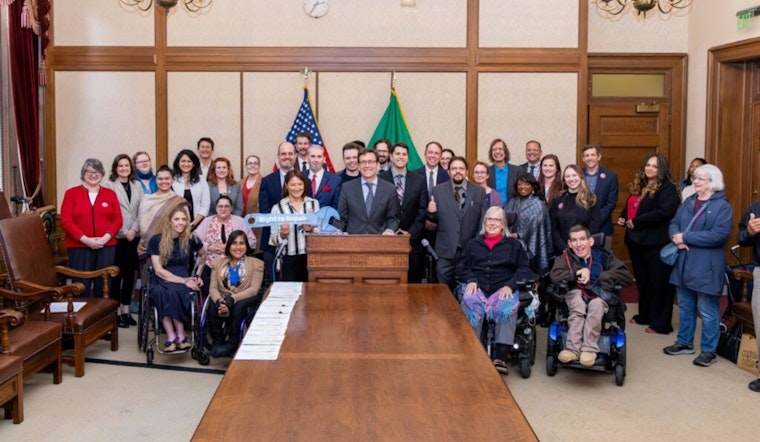
Washington residents now have legal backup when they decide to fix their own busted tech. Instead of being funneled straight to manufacturer repair centers, people with broken phones, laptops or common household appliances can turn to independent shops, backed by a new state law that forces manufacturers to share parts, diagnostic tools and repair instructions. Supporters say the shift should cut e‑waste, trim household costs and give small repair businesses a cleaner shot at keeping usable devices out of the trash.
How the law took effect
Gov. Bob Ferguson signed the right-to-repair bills in May, and they were chaptered as Chapter 353, Laws of 2025. The enrolled bill sets a general effective date in late July 2025, while scheduling the law’s core repair requirements to kick in on January 1, 2026, according to the Washington State Legislature. Hoodline covered the measures as they moved through Olympia, noting growing local interest as the bills advanced.
What manufacturers must provide
Starting January 1, 2026, original manufacturers are required to offer, on fair and reasonable terms, the parts, tools and documentation needed to diagnose, maintain and repair covered digital electronic products. That list includes cellphones, computers and many home appliances, Consumer Reports explains. The obligation applies to devices that were first manufactured and then first sold or used in Washington on or after July 1, 2021, and the statute carves out specific exemptions, such as some medical devices and industrial equipment.
Parts pairing and limits
The law also takes aim at so‑called “parts pairing,” a software tactic that can cause replacement components to fail or misbehave if they are not officially blessed. For many devices built after January 1, 2026, manufacturers cannot rely on pairing to block repairs, downgrade performance or flash misleading warning messages. At the same time, legal summaries note that the statute keeps narrow security exceptions in place, such as for stand‑alone biometric components that exist strictly for authentication uses. Dickinson Wright offers a detailed rundown of those limits and carve-outs.
Enforcement and legal limits
Day-to-day enforcement will sit with the Washington attorney general, using the state’s consumer protection laws. The chapter “may be enforced solely by the attorney general under the consumer protection act, chapter 19.86 RCW,” so individual consumers and repair shops do not get a new private right of action under this statute. The enrolled bill, archived by the Washington State Legislature, spells out the enforcement framework.
What this means locally
County recycling officials and local fix‑it advocates say the change should slow the tide of electronics headed for disposal and give independent repair shops relief after years of battling limited access to parts and diagnostic software. Adrian Tan, policy and market development manager with King County’s Recycling and Environmental Services, told KUOW that the law is designed in part to cut down on waste and to offer people more affordable options when their devices break.
Reaction from fixers and advocates
Repair advocates and trade groups quickly cheered the move. Communities of small businesses and DIY fixers have framed Washington’s action as a major victory that could help neighborhood shops compete and keep gadgets working longer, according to coverage from iFixit. Disability advocates have also highlighted the companion bill focused on mobility equipment, which is intended to shorten the months‑long waits many wheelchair users experience for basic fixes, calling it a crucial piece of the overall package, according to a release from House Democrats of Washington.
How to use the new law
Once the statute’s repair provisions are in force on January 1, 2026, independent repair providers and individual owners will be able to request parts, tools and documentation on fair and reasonable terms. If a manufacturer refuses or sets conditions that appear out of bounds, the attorney general can investigate and seek remedies under the Consumer Protection Act. Repair advocates suggest keeping written records of every request, denial and fee quote, since those details could matter if the state decides to step in, according to resources from Repair.org.



