

























































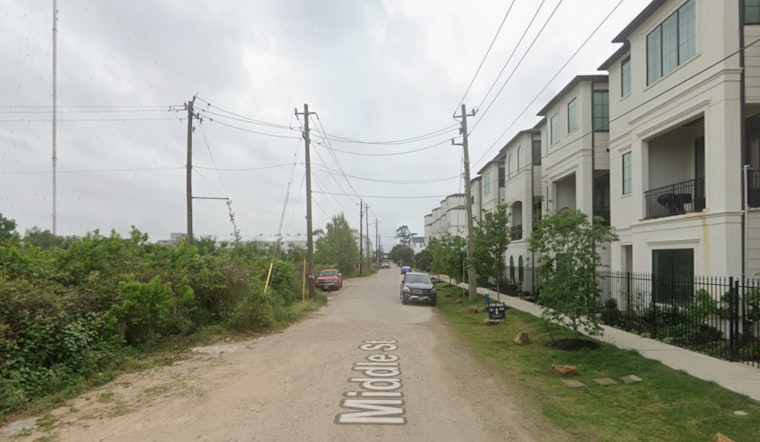
Houston’s housing drama at 800 Middle Street is back on center stage, with the Houston Housing Authority (HHA) now laying out how it plans to fill The Pointe at Bayou Bend, a nearly finished low-income complex in the Second Ward. The project has been tangled in controversy for more than two years after contractors and inspectors found legacy ash from the city’s long-gone Velasco trash incinerator near the site. Neighbors and environmental advocates argue that pressing ahead puts public health and government oversight under renewed scrutiny, just as families wait on long-promised affordable units.
As reported by FOX 26, HHA posted its formal “plan to occupy” the complex on Tuesday, Jan. 13. Move-ins have been on hold since November 2024, after federal agents, including EPA specialists and personnel from HUD’s Office of Inspector General, served a search warrant and collected soil samples, according to KTRK/ABC13. Activists and some lawmakers say moving forward now is premature while testing results and enforcement decisions are still not fully resolved.
Legacy ash and state findings
State investigators trace the contamination risk to decades of ash dumping from the Velasco incinerator. The Texas Commission on Environmental Quality issued four violations after an investigation that found construction crews were exposed to ash and that there were failures in sampling and documentation, as outlined in the TCEQ enforcement letter. Independent lab work and local reporting have detected elevated levels of lead, mercury, and arsenic in material removed during construction, Click2Houston reported, and aerial imagery reviewed by reporters has suggested ash deposits could reach dozens of feet deep. The TCEQ investigation and subsequent notices remain part of the public record and frame the compliance issues that regulators say HHA must address.
City leaders and HHA respond
Mayor John Whitmire asked HHA to halt move-ins last summer and later warned that roughly $130 million tied to the project, from both public and private sources, could be at risk if soil problems proved widespread. HHA has pushed back, saying the apartment buildings were constructed on a portion of the property where “there is no buried ash” and that it has hired Braun Intertec to perform additional soil borings and testing, as reported by FOX 26.
Legal and regulatory stakes
The TCEQ’s September 2023 notice lists outstanding alleged violations and the documentation the agency said HHA must submit to demonstrate compliance, along with a schedule for corrective action, according to the TCEQ enforcement letter. The Texas Department of Housing and Community Affairs also required a new independent environmental site assessment in 2023, per reporting by the Houston Chronicle. With state regulators and federal investigators both involved, the development faces multiple paths to enforcement action or litigation if testing or paperwork fall short.
What happens next
HHA’s occupancy plan sets a public timeline for filling units, but regulators say they will not sign off until sampling, analysis and corrective documentation are complete. TCEQ told KTRK/ABC13 that some items remain unresolved and that federal lab work is still pending. The fate of the complex is tied both to those test results and to funding questions: reporting has placed the project’s price tag in the low hundreds of millions of dollars, with some outlets estimating as much as $146 million, Click2Houston noted. For now, neighborhood groups and several elected officials say they intend to keep pressing for independent verification of safety before any families move in.



