

























































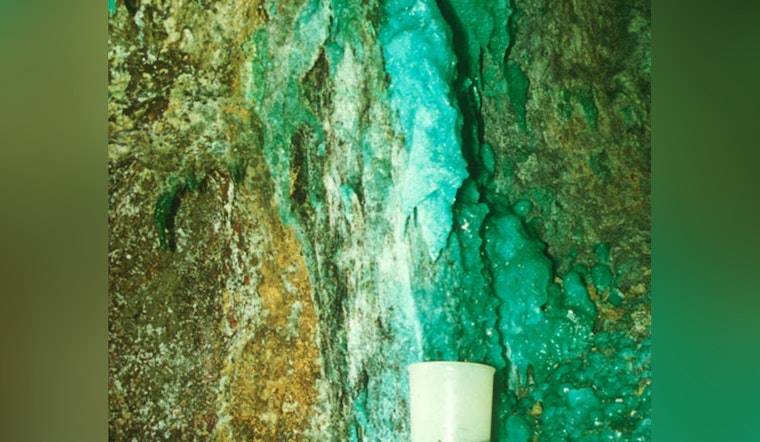
Northern California’s mining past is still very much the Redding area’s present. This winter, the Environmental Protection Agency is pushing ahead on two fronts: crews continue treating intensely acidic drainage from Iron Mountain Mine while the agency ramps up multi-year study work at the newly listed Afterthought Mine near Ingot. Both sites send metal-laden, highly acidic water into Little Cow Creek and, eventually, the Sacramento River, threatening fish and downstream water supplies.
Iron Mountain's long-running treatment
The Minnesota Flats Treatment Plant runs around the clock to neutralize acid and capture dissolved metals that would otherwise head downstream. According to EPA, the plant treated roughly 1.6 billion gallons of acid mine drainage between 2013 and 2017 and stripped out about 2 million pounds of zinc and 600,000 pounds of copper in that period. In a typical year, it handles around 400 million gallons and has cut the site’s metal load by about 97 percent.
How acidic are the waters?
Some discharges at Iron Mountain have registered negative pH values as low as −3.6, making the seepage among the most acidic natural waters ever measured and strong enough to dissolve metal and harm aquatic life, the U.S. Geological Survey notes. That cocktail of extreme acidity with dissolved copper, zinc and cadmium helped fuel decades of contaminated sediment and historic fish kills in Spring Creek and Keswick Reservoir.
Afterthought Mine is now on the Superfund list
The Afterthought Mine, clearly visible from Highway 299 near the tiny community of Ingot, was added to the EPA's National Priorities List on Sept. 4, 2024, opening the door to federal study and cleanup planning, according to the EPA. EPA project manager John Hillenbrand told the Redding Record-Searchlight that the solution coming from the Afterthought is “pure acid” and said the agency expects roughly three to five years of monitoring and design work before final cleanup actions are picked.
Where the pollution goes
Rain and spring runoff wash acid and metals from both sites into Little Cow Creek and then the Sacramento River, where state criteria for cadmium, copper and zinc are exceeded by large margins. Local reporting has warned that fish from nearby creeks may be unsafe to eat. That downstream pathway, along with the fact that Little Cow Creek is designated critical habitat for steelhead, underpins the EPA’s decision to list Afterthought and to keep Iron Mountain’s treatment plant running. According to KQMS, the contamination flows through private ranchland and into waterways that are used downstream for irrigation and recreation.
Money and responsibility
Iron Mountain’s cleanup has been funded in part by long-running agreements with responsible parties. A 2000 settlement committed companies to support and secure operations for decades and included provisions for roughly $514 million to cover future site costs, the Justice Department said. The Afterthought listing now triggers EPA studies to determine whether potentially liable parties exist and how any eventual cleanup will be paid for.
Local reaction
Shasta County officials have largely welcomed the federal attention. Supervisor Mary Rickert told the Record-Searchlight the listing was “long overdue,” noting that Little Cow Creek feeds private property and livestock downstream. Residents, for their part, say they will be watching closely for data releases and public meetings.
What comes next
EPA staff say the Afterthought site is now headed into years of pre-cleanup study to track springs, seasonal runoff, and the surrounding ecosystem. Where it makes sense, the agency says it prefers passive treatment systems that rely on natural filtration instead of energy-hungry pumps. Local and federal accounts differ a bit on the running totals; some reports round the work to billions of gallons treated and millions of pounds of metals removed over decades, but all sides agree this is a long-term project that will require ongoing oversight. For additional context on that complicated legacy, see Action News Now.
For Redding-area residents, the immediate guidance is straightforward: avoid contact with affected creeks, heed advisory signs, and expect periodic updates and public meetings as EPA moves from study to design at Afterthought and keeps long-term treatment going at Iron Mountain.





