

























































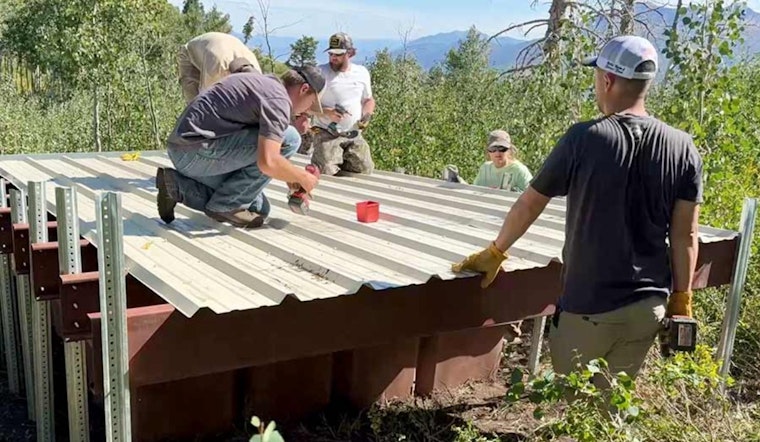
In 2025, the Utah Division of Wildlife Resources Dedicated Hunter Program witnessed an impressive surge in conservation efforts, with its volunteers completing 1,176 projects aimed at enhancing the state's wildlife habitat. The program, which offers an extended hunting season to those willing to give back to the natural world, had 1,547 deer hunters enrolled last year, each committing to at least 32 hours of labor to qualify for their deer permits or paying for their hours, according to the Utah Division of Wildlife Resources.
Participants collectively clocked in 62,417 volunteer hours, their labor and the materials they provided amounting to an equivalent of $2.4 million. Aaron Sisson, the DWR Dedicated Hunter Coordinator, in a statement obtained by the Utah Division of Wildlife Resources, described the program as "a partnership where hunters and the DWR work together to improve wildlife habitat, increase hunting and angling opportunities, and support all forms of wildlife recreation in Utah." Despite their efforts being aimed primarily at benefiting big game animals and their habitats, the volunteers, whose commitment benefits an array of wildlife, managed these tasks.
Last year's initiatives spanned a wide array of activities. Volunteers planted seeds and shrubs to rehabilitate habitats, where trash was removed from wildlife management areas and noxious weeds. They also installed guzzlers, large devices for collecting and storing rain and snow to provide wildlife with drinking water during dry spells. Further assistance was offered for wildlife monitoring, which included helping biologists with wildlife population surveys, engaging in fish gillnetting surveys, and supporting bird-banding projects to track migrations.
Whilst teaching hunting and fishing to newcomers, the participants dedicated their time effectively to ensuring future generations understand the value of conserving Utah's wildlife. Volunteer efforts also extended to maintaining and repairing state facilities, along with assisting in wildlife recreation events, as disclosed by the Utah Division of Wildlife Resources.





