

























































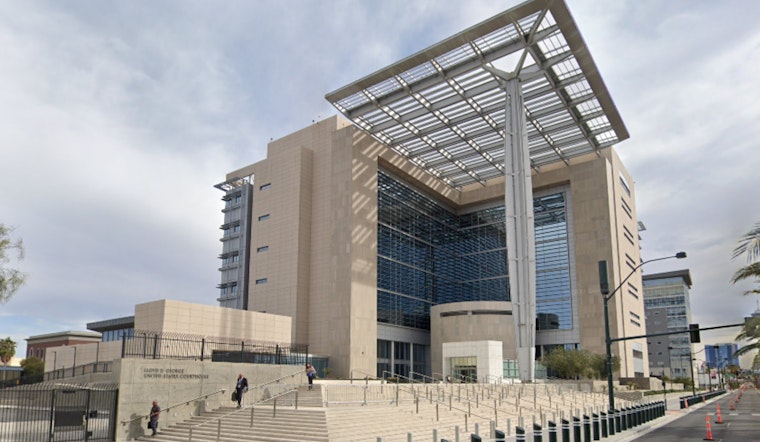
A Las Vegas woman who livestreamed an anti‑ICE protest last summer is now asking a federal judge to put strict limits on how the Las Vegas Metropolitan Police Department orders crowds to clear out. In a new filing, protester Karlin Martinez argues that dispatch logs, internal messages and body‑camera footage show officers went after people because they were protesting, not because they were committing crimes. Her motion asks the court to spell out when Metro can arrest someone for failing to disperse and to require clear, specific instructions about how and when people must leave. The request lands as one more entry in a growing stack of civil cases over how Metro polices downtown demonstrations.
What Martinez Wants From The Court
Martinez is asking the U.S. District Court for the District of Nevada for a temporary restraining order and preliminary injunction that would rein in how Metro uses dispersal orders, according to the Las Vegas Sun. Her motion says officers should not arrest anyone unless there is probable cause the person actually heard a dispersal order and then refused to comply, and it urges the court to require police to tell crowds exactly where they can go and when an order is lifted. The filing notes that Martinez now steers clear of protests altogether, citing safety worries in light of recent national incidents. Her attorneys want the judge to act quickly on the requested restrictions while discovery and the broader lawsuit continue.
Where The Case Stands
Martinez originally brought her complaint in state court on Oct. 27, 2025, the Las Vegas Review‑Journal reported. Metro then shifted the case into federal court in early January, where it is now listed as Martinez v. Las Vegas Metropolitan Police Department on the public docket at Justia Dockets & Filings. The federal docket shows which judge drew the case along with filing deadlines and other scheduling details. The lawsuit now sits among several pending challenges to Metro’s crowd‑control tactics.
How Police Responded That Night
On June 11, 2025, Metro declared an unlawful assembly during the downtown protest and ultimately arrested 94 people, while the department reported that four officers were injured, according to local coverage of its news release. Martinez’s motion points to a computer‑aided dispatch entry that allegedly stated "arrest if they are protesting" and to claimed internal directions such as "if they have signs, they can be arrested," and it says body‑camera footage appears to show a woman following an officer’s commands before being hit with a pepper‑ball round, the Las Vegas Sun reported. Those details sit at the heart of Martinez’s argument that Metro’s crowd‑control response discouraged protected speech. Local outlets, including KTNV, reported the next day on the wave of arrests and the department’s public statement.
Other Lawsuits And The Wider Context
Martinez’s motion lands alongside other civil suits accusing Metro of misusing less‑lethal munitions and mishandling protest‑related arrest records. In a separate case, plaintiff Kathleen Cavalaro alleges an officer shot her with pepper balls after she criticized police and later falsified her arrest location and time, according to the Las Vegas Review‑Journal. Civil‑liberties advocates have also pressed Metro for more openness about its work with federal immigration authorities, which has formed part of the backdrop for the downtown protests, per the ACLU of Nevada. Attorneys in the Martinez case say this cluster of lawsuits points to a broader pattern that justifies closer court supervision of dispersal orders and protest‑policing strategies.
What A Judge Will Consider
To win a temporary restraining order or preliminary injunction, Martinez has to satisfy the federal four‑part test: she must show she is likely to succeed on the merits, that she faces likely irreparable harm without court action, that the balance of equities favors her, and that an injunction would serve the public interest. Under Ninth Circuit precedent, district judges can apply those Winter‑era standards while also granting relief where there are "serious questions" on the merits and the equities tip sharply in the plaintiff’s favor, as explained in appellate decisions such as Alliance for the Wild Rockies v. Cottrell. The judge assigned to Martinez’s case will weigh her evidence against that demanding legal test before deciding whether to put the requested rules in place, as per Justia.
Metro has not given immediate comment to local media about the new federal filing, and the public docket will show the next steps in the case along with any responses filed by the department and individual officers.



