

























































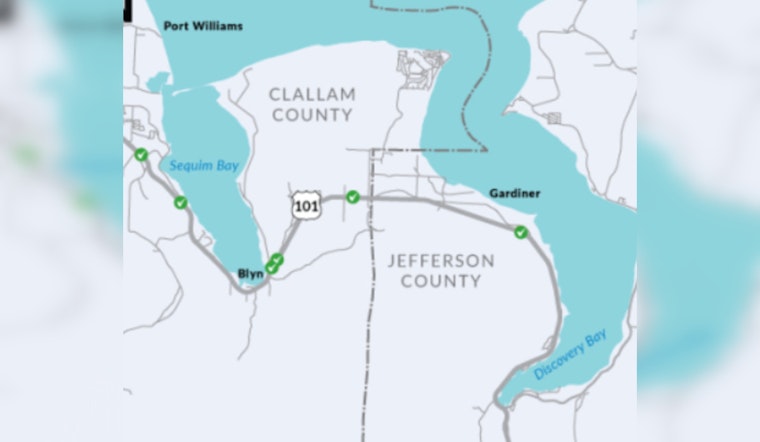
After substantial efforts spanning several years, the Washington State Department of Transportation (WSDOT) has officially completed the major construction on US 101 between Sequim and Gardiner, a crucial step aimed at improving fish movement. In a project that cost an estimated $144.8 million, crews have tackled a necessary balance between the ongoing transportation needs of local residents and the ecological requirements of the area's fish populations. The construction began back in the summer of 2023, focusing on removing barriers that impaired the migratory routes of fish at Eagle Creek near Gardiner.
A total of six locations under US 101 were targeted for improvements, where aging culverts that previously prevented fish from navigating were removed. The extensive work by WSDOT was set to swiftly correct these barriers and, at the same time, to somehow continue to keep the traffic moving without a hitch. According to the department's statement, "temporary two-lane bypass roads" were constructed, ensuring minimal disruption to the local commute.
The overall project not only replaced old culverts with newer structures but also created an additional 15 miles of potential habitat for fish. To achieve this meticulous work, crews had to dig through the roadway to enable the construction of five new bridges and a larger culvert at the sixth location. WSDOT's initiative to remove obstacles for fish under state highways spans back to 1991, and their practices align with a federal court injunction from 2013 that directs the state to correct barrier culverts that affect salmon and steelhead in western Washington. This recent project is an extension of that long-held commitment.
Part of this work entailed rebuilding streambeds at each site, with crews meticulously working to install logs and root wads into the stream. These elements serve to provide sanctuary and resting areas for fish, enhancing their habitat. Moreover, workers planted native vegetation to offer critical nutrients and shade, both of which are vital for the health of the waterways and the fish that inhabit them. In a statement, WSDOT explained that "landscaping and final touches" were finished by mid-December, signaling the near completion of the expansive project. However, some minor tasks remain and have to be addressed once the weather is sufficiently warm and dry, particularly a repair to the roadway near Blyn.
Although the major construction efforts are wrapped up, WSDOT cautions travelers to reduce their speed to 35 mph in the Blyn area, near Chicken Coop Road, until the upcoming repairs are made. For those interested in staying up-to-date on the latest travel information, WSDOT recommends checking their app or the statewide travel map for the most current updates.




