

























































UPDATE (February 18, 2026 09:56am): The official number of missing people has been adjusted to 9.
A terrifying avalanche swept through a guided backcountry ski group near Castle Peak outside Truckee on Tuesday morning, burying or sweeping away 9 skiers and leaving six survivors stranded at elevation in whiteout conditions — all while one of the most powerful winter storms in recent memory raged overhead. The incident has set off one of the largest mountain rescue operations in the region's recent history, involving 46 emergency responders from multiple counties battling the same conditions that caused the slide in the first place.
What Happened on the Mountain
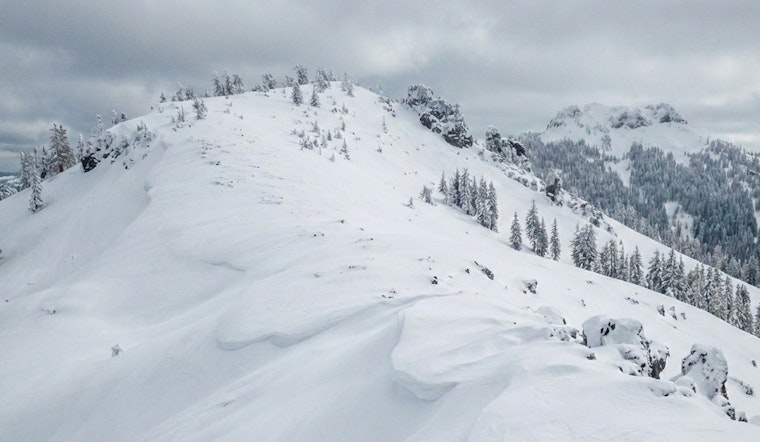
The avalanche struck at approximately 11:30 a.m. on February 17 near the Frog Lake backcountry huts in the Castle Peak area of the Tahoe National Forest, northwest of Lake Tahoe, according to the Associated Press. The group — 12 clients and four professional guides from Blackbird Mountain Guides — had been staying at the Frog Lake Huts since February 15 and were on their way back to the trailhead to cap off a three-day backcountry ski trip when the slide hit.
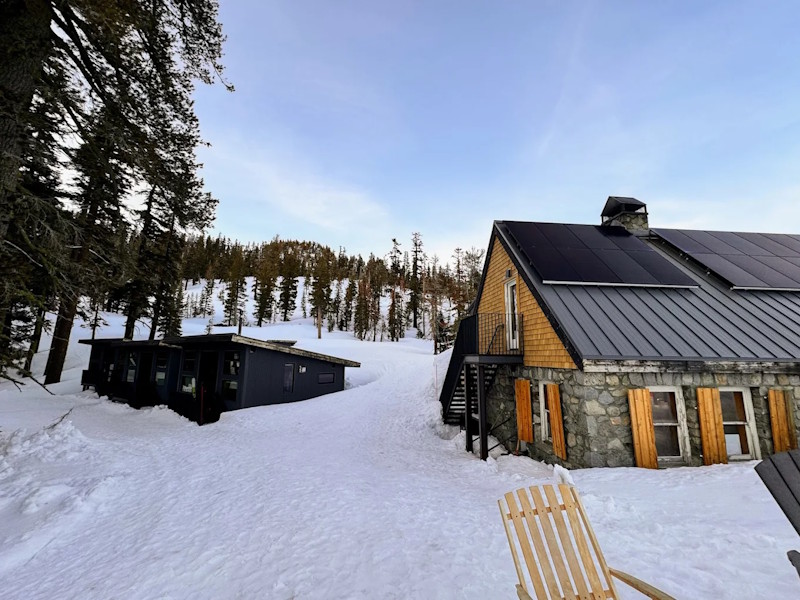
Frog Lake Backcountry Huts | Source: Keven Casey / Google Maps
Six survivors managed to shelter in place, rigging up a makeshift tarp shelter and activating their emergency beacons to communicate with rescuers via satellite text messages. "They are doing the best they can. They have taken refuge in an area, they have made up a makeshift shelter with a tarp and are doing everything they can to survive and wait for rescue," Nevada County Sheriff Capt. Russell Greene told KCRA-TV. Three of the six survivors sustained injuries that prevented them from skiing out on their own, as reported by ABC News, further complicating an already grueling extraction.
The Frog Lake Huts, a backcountry lodge operated by the Truckee Donner Land Trust, sit in terrain that the trust's own website acknowledges carries "some degree of avalanche hazard," with the standard return route to the Castle Peak trailhead — a roughly 3.5-mile trek near Boreal ski area — described as passing through "numerous avalanche hazards," according to The Press Democrat. It was not immediately clear what the land trust's policies are for guests scheduled to check out during high-danger avalanche conditions.
A Race Against the Storm
Reaching the survivors has been an undertaking in itself. Rescue ski teams departed from both Boreal Mountain Ski Resort and Tahoe Donner's Alder Creek Adventure Center, while a SnoCat team was also dispatched, and snowmobiles were on standby. As reported by NBC News, responding agencies included search and rescue teams from Nevada, Placer, and Washoe counties, along with Tahoe Nordic Search and Rescue and Truckee Fire — 46 first responders in total. Helicopter rescue was ruled out entirely due to weather, with the California Highway Patrol warning of "full whiteout conditions" across Donner Summit.
The Sierra Avalanche Center had issued a formal avalanche warning for the Central Sierra Nevada beginning at 5 a.m. Tuesday — hours before the slide — stating that "large avalanches are expected to occur Tuesday, Tuesday night, and into at least early Wednesday morning across backcountry terrain." Avalanche danger was rated HIGH, the second-most-dangerous level on the scale, driven by two to three feet of fresh snow accumulated over 36 hours falling at rates of up to four inches per hour, compounded by gale-force winds loading fragile snowpack layers. "It's particularly dangerous in the backcountry right now just because we're at the height of the storm," Brandon Schwartz, lead avalanche forecaster at the Sierra Avalanche Center, told AP.
Interstate 80 over Donner Summit was closed from Colfax to the Nevada state line Tuesday due to spinouts and crashes, per the California Department of Transportation, hampering rescue response. "It obviously hampered our response," Greene told NBC News. Governor Gavin Newsom was briefed on the situation, with his office confirming a state-level, all-hands search-and-rescue effort.
About Blackbird Mountain Guides
Blackbird Mountain Guides, the Tahoe-based company leading the ill-fated trip, is no stranger to backcountry education — the outfit was actually named the top AIARE (American Institute for Avalanche Research and Education) course provider in the U.S. in both 2024 and 2025 for running the most avalanche safety courses and training the most students, according to its website. The company confirmed the incident in a public statement Tuesday evening, saying its leadership was "working in full coordination with the Nevada County Sheriff's Office and Nevada County Search and Rescue" and was in direct contact with the families of those involved.
The fact that a company steeped in avalanche education was caught in such a severe slide underscores how extreme Tuesday's conditions were — and raises honest questions about the timing of the group's departure on what was known to be a high-danger avalanche day. Steve Reynaud, a Tahoe National Forest avalanche forecaster, noted that "an avalanche burying seven to 10 people would be a very large avalanche, or a group being in a bad location, or potentially both," as quoted by The Press Democrat.
A Region With a Dark History of Snow Disasters
Castle Peak sits in the Donner Summit area — named for the Donner Party, whose ill-fated 1846–47 entrapment in the Sierra Nevada became one of American history's most grimly remembered winter tragedies. The irony isn't lost on locals that this same stretch of mountains continues to claim and endanger lives in severe winter conditions, over 175 years later.
The area has seen a troubling run of avalanche incidents in recent months alone. Just last month, a snowmobiler was killed in a separate avalanche near Johnson and Castle Peak, as noted by CBS Sacramento. In February 2025, backcountry skier Frederic Dross was killed in an avalanche south of Lake Tahoe, and the year before that, a skier died in an avalanche at Palisades Tahoe's expert terrain, according to The Press Democrat. Nationally, avalanches kill 25 to 30 people per year, according to the National Avalanche Center, and the 2025–26 season had already tallied six fatalities as of mid-January.
Backcountry skiing has surged in popularity since the pandemic, drawing more skiers into uncontrolled terrain where no avalanche mitigation programs exist. The Sierra Avalanche Center's warning on Tuesday was explicit: "Travel in, near, or below avalanche terrain is not recommended today." As of Tuesday evening, the search for the 10 missing skiers continued under harrowing conditions, with the outcome still uncertain.





