

























































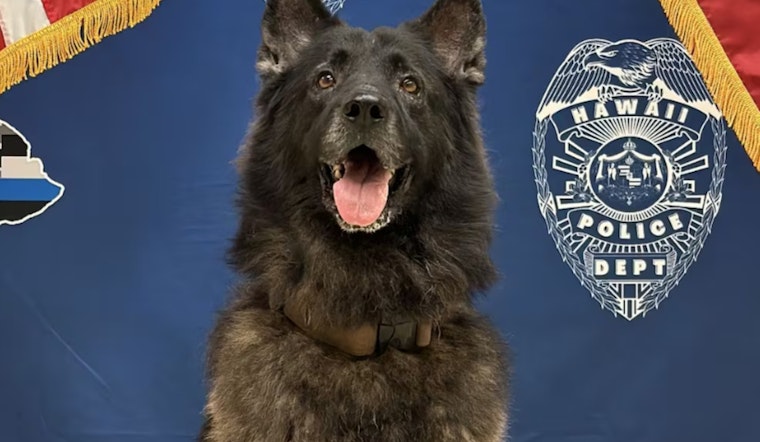
Hawaii County police have quietly started outfitting their K-9 teams with temperature monitors and sensor collars after the death of Archer, a department dog who was left unattended in a patrol vehicle last September. The new gear is designed to alert handlers and supervisors if a dog’s temperature or vitals spike, and the county has also remodeled kennels at the Kona police station to give the animals more shaded, grassy space. Handlers say the equipment is already in use and adds a much-needed extra layer of protection for dogs that spend long hours on duty.
According to Hawaii News Now, Hawaii County installed temperature sensors in K-9 handlers’ vehicles that notify both the officer and command staff if the interior becomes dangerously hot. The county’s six K-9s are also wearing specialized collars that track temperature, location and body heat, and trigger alarms if a dog overheats. That outlet also reported that the State Attorney General declined to bring criminal charges in Archer’s death and that an internal review concluded discipline was warranted.
What the new collars monitor
Officer Kyle Murray, who handles K-9 Kim, said the collars send real-time readings to a handler’s phone and can alert supervisors if something looks off. Murray told Hawaii News Now that Kim’s collar tracks temperature, location and body heat, and that "she is with me when I come to work and I bring her back home too." The devices are meant to serve as redundant checks in case a dog is left in a vehicle or becomes distressed between patrols.
Investigation, costs and kennel upgrades
The Hawai‘i Police Department called Archer’s death "a preventable tragedy" and said it conducted criminal and administrative inquiries, according to the department’s press release. The Hawai‘i Police Department also said it would review K-9 policies and procedures while the force mourned Archer.
Local reporting shows the Hawaii Island K9 Association funded a remodel of the Kona kennels and that the department purchased several in-car heat sensors and collars as part of a broader safety rollout. Big Island Now reported the initial sensor purchases and estimated collar costs tied to the program.
Why the change matters
Parked vehicles can heat up quickly, and even a brief lapse in supervision can be deadly for dogs, which is why departments across the country are looking to technology as a backstop. The ASPCA notes that interior temperatures can climb dramatically within minutes, making cars hazardous for animals on even moderately warm days. County officials say the collars and vehicle monitors are intended to give handlers and supervisors a faster warning so they can step in before a dog is harmed.





