

























































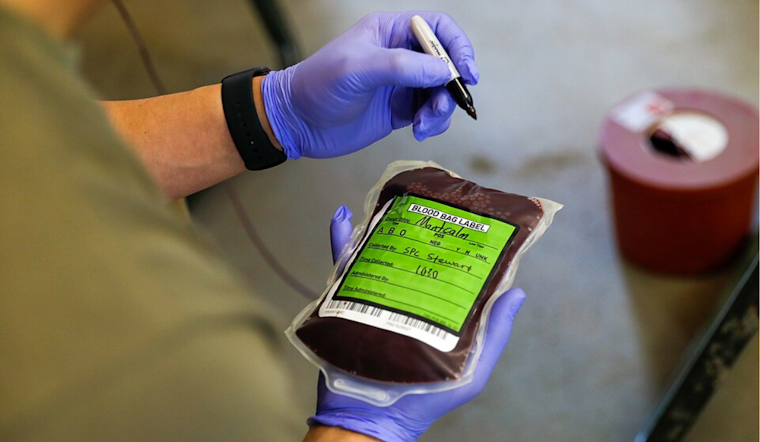
Arlington paramedics can now hang a bag of whole blood in a driveway, at a crash scene, or in the back of an ambulance, instead of waiting to reach the hospital. City officials said today that select Arlington Fire Department and American Medical Response units are now stocked with donor whole blood, allowing crews to start transfusions minutes earlier than before.
The Whole Blood Program is aimed at patients with major trauma, postpartum hemorrhage, and other life‑threatening bleeding, where every minute counts. The rollout comes as more EMS systems across Texas add prehospital transfusion to their toolkits.
How the program works
Under the new protocol, specific quick‑response and supervisor vehicles carry low‑titer whole blood, so trained crews can start transfusions either on scene or while heading to the hospital when a patient's bleeding meets dispatch criteria.
If a 911 call triggers a blood dispatch, the closest unit stocked with whole blood responds. Paramedics and firefighters then begin transfusion while moving the patient to Medical City Arlington or another trauma center. The rollout followed months of training and began with a limited number of units in service to test how the logistics would work in real life, as reported by EMS1.
Partners and logistics
Medical City Arlington supplies and manages the blood inventory, while American Medical Response and the Arlington Fire Department handle storage, rotation, and administration on their vehicles.
Protocols spell out how the blood must be refrigerated, tracked, and checked for safety. Crews received training not only on clinical procedures, but also on how to identify and respect any religious objections to transfusion. Medical City Healthcare outlined the collaboration in a hospital newsroom post.
Why it matters
Clinical studies have found that getting whole blood into patients earlier is tied to better shock physiology and higher chances of survival for those with severe hemorrhage. Recent multi‑center analyses, along with a December 2025 study, reported that prehospital whole‑blood transfusion improved survival compared with waiting until after hospital arrival.
That evidence, combined with local training and coordination, is the main justification officials cite for pushing blood treatment closer to the point of injury. The American Journal of Surgery study offers more detail on the outcomes.
Statewide push and what Arlingtoners should know
State leaders have also stepped in. Texas lawmakers and health agencies have set aside funding to support prehospital transfusion pilots and help EMS agencies scale up these programs, a move advocates say could make efforts like Arlington's more sustainable over time, according to AABB.





.jpg)