

























































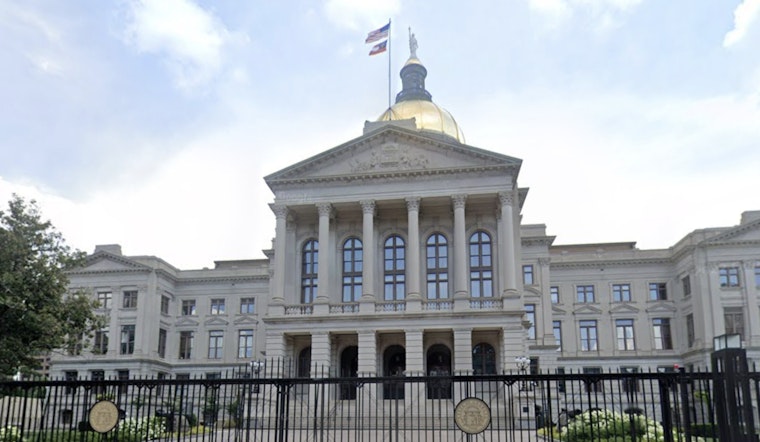
At the Georgia State Capitol on Wednesday, lawmakers, civil-rights leaders and descendants gathered for what many described as a long-overdue moment: a formal step toward a permanent monument to the Original 33, the Black legislators elected to the General Assembly during Reconstruction. The project is authorized by House Bill 303, which cleared the legislature last year and allows a memorial to be installed on Capitol grounds. Organizers say the monument will be privately funded and designed to put a painful chapter of Georgia’s history squarely in front of visitors and school groups rather than tucked away in footnotes.
Former Atlanta mayor Shirley Franklin, former Georgia Supreme Court Justice Leah Ward Sears and former U.S. Ambassador Andrew Young headlined the ceremony, joined by descendants who said they had only recently discovered their ancestors’ roles in state politics. As reported by CBS Atlanta, Rep. Carl Gilliard, the sponsor of HB 303, told the crowd, “It feels tremendously like a weight of the world has been lifted that these great men can finally be recognized.” A temporary exhibit by SCAD was set up alongside the event to provide additional context.
What the law authorizes
As outlined by LegiScan, HB 303, known as the Original 33 Memorial Act, authorizes a monument on State Capitol grounds and a related marker program across Georgia, while clearly stating that installation depends on private fundraising. The bill passed both chambers unanimously and was signed by Gov. Brian Kemp on May 1, 2025, according to WTOC. With the law in place, organizers are now turning to the less glamorous but crucial work of raising money and building out a memorial committee.
Who the Original 33 were
The Original 33 were 30 representatives and three state senators elected to the Georgia General Assembly in 1868. They were expelled that same year and, after legal challenges and federal intervention, were reinstated by 1870. As detailed by The Original 33, many of these men and their communities endured violence and intimidation during Reconstruction, including events such as the Camilla Massacre. Advocates say the monument is meant to confront those realities directly and turn them into a history lesson that cannot be easily ignored.
Placement, funding and next steps
Gilliard has said he would like to see the monument installed on the Capitol’s third floor, in the corridor that connects the House and Senate chambers. He and other organizers have a meeting scheduled with the State Capitol Commission next month to talk through potential locations, according to CBS Atlanta. Officials say the memorial committee will collaborate with descendants, historians and architects on the design and fundraising strategy before announcing any construction timeline.
Both the ceremony and the law mark the beginning of a new phase of public remembrance in Georgia, one that organizers and descendants stress is meant to educate, not excuse, the past. Leaders expect to roll out design concepts and fundraising targets once the committee is formally appointed and initial outreach to donors is underway.



