

























































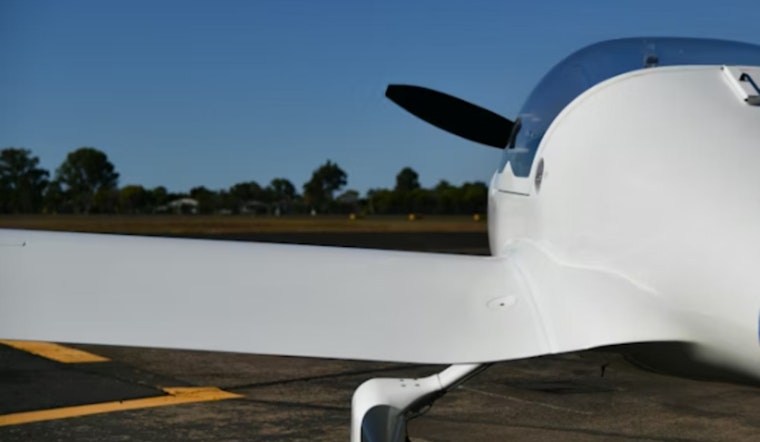
Austin’s drone economy is getting a serious jolt. Skyways, a homegrown startup building long-range, fully autonomous cargo aircraft, is gearing up for a major growth spurt as it shifts from flashy demo flights to real-world production. That next phase is expected to bring a wave of engineering and assembly jobs to Central Texas as the company turns its prototypes into factory-ready designs. Local manufacturers and suppliers could also see fresh business if Skyways hits its hiring and output goals.
As reported by the Austin American-Statesman, Skyways currently employs about 30 people in Central Texas. CEO Charles Acknin told the paper the company plans to roughly double that number over the course of 2026. The Statesman also notes Skyways is preparing to launch production at a roughly 250,000-square-foot site in the Tech Ridge area and intends to relocate its flight-test operations to a new location just south of Elgin in the coming weeks.
Defense Contracts Are Bankrolling The Next Phase
That hiring spree is not coming out of thin air. Skyways has been landing defense work that executives say is helping pay for its manufacturing ramp. The company announced an Air Force AFWERX award that leadership says will push its V3 prototype toward full production.
According to Skyways, the V3 is being developed to carry roughly 100 pounds over more than 1,000 miles, while the company’s V2 platform - already flying long-range logistics missions overseas - handles smaller payload runs today.
Central Texas Test Flights And The Near-Term Hiring Curve
Residents east of Austin may have already seen the future overhead. Company test flights were spotted near Giddings, about 50 miles east of the city, with demonstrators showing off both the V2 and V3 aircraft during late-January trials, Yahoo reported. The V2 is built for long-range missions with a modest useful load, and Acknin told the Austin American-Statesman he estimates a fully scaled fleet could operate at about $100 per flight hour, a cost that undercuts many helicopter missions by a wide margin.
Skyways says most of its new hires will be software and avionics engineers along with production technicians, as it outfits assembly space in North Austin and ramps up testing to meet growing defense and commercial demand.
Policy Tailwinds And A Bigger National Drone Push
Federal policy is giving companies like Skyways a handy tailwind. The White House issued an executive order titled “Unleashing American Drone Dominance” on June 6, 2025, directing the FAA and other agencies to speed up routine beyond-visual-line-of-sight operations and other integration work, as published in the Federal Register.
Analysts point out that the Pentagon’s FY2026 budget request created a new autonomy line and set aside major funding for unmanned systems. Coverage of that request has highlighted roughly $9.4 billion aimed at aerial drones in FY2026, signaling stronger procurement demand for platforms similar to those Skyways is developing. The Federal Register provides key context for how those dollars are expected to shape the broader drone landscape.
Skyways says it plans to build out its production capability during 2026 so it is ready to scale in 2027. Company spokespeople have pointed to existing overseas commercial work and current defense awards as the foundation for that hiring push. Skyways has told reporters it will concentrate on adding engineers and production staff as it brings the Tech Ridge manufacturing line online.





