

























































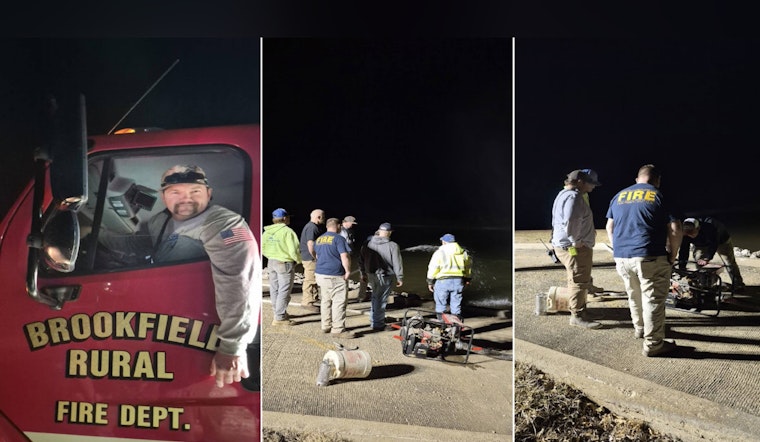
While the city sleeps, the fire department in Brookfield remains vigilantly poised for the obscure yet potentially dire emergencies that may unfold in the dead of night. The department's recent training session, held on February 18, was far from an ordinary drill. Detailed in a social media post by the Brookfield Fire Department, they highlighted the importance of readiness for "high-consequence, low-frequency" situations—scenarios they seldom encounter but demand utmost proficiency when they do arise.
Last night's exercises revolved around portable pump operations, a facet of firefighting underscoring the significance of water mobility in zones forsaken by hydrants. The department’s training aimed to ensure that every firefighter comprehends the urgent necessity of the technique—knowing how to deploy this gear to pull water from sources like ponds or pools when the supply lines run thin. "If we can’t move water, we can’t fight fire," the Brookfield Fire Department's post on Facebook laid out plainly.
In another aspect of the training, the department turned its focus to the unique capabilities of Tanker 1. Unlike most fire trucks, which must be stationary to pump water, Tanker 1 flaunts the ability to “pump and roll”—a functionality that has proven invaluable in combatting wildland fires. It allows the responders to tackle a blaze from various angles while on the move, providing more dynamic and efficient firefighting, mainly when dealing with fast-moving grass fires.
Practice on Tanker 1, although not a weekly task for the firefighters, is critical. "Tanker 1 is heavy and primarily serves as our water supply truck," the department's Facebook post explained, but underlining the fact that "pump & roll can change the tempo of the operation" when it's truly needed. This emphasizes that even the mightiest tools in their arsenal need routine check-ups and drills, so that firefighters can deliver when it counts the most.
The training sessions the Brookfield Fire Department engages in are designed not just to maintain skill levels but also to foster teamwork and ensure that every crew member can operate critical equipment under pressure. Through this meticulous approach, they aim to prevent the most catastrophic outcomes when they face the unpredictability of reality, all the while operating under the axiom that hones every drill: "Low frequency. High consequence."





