

























































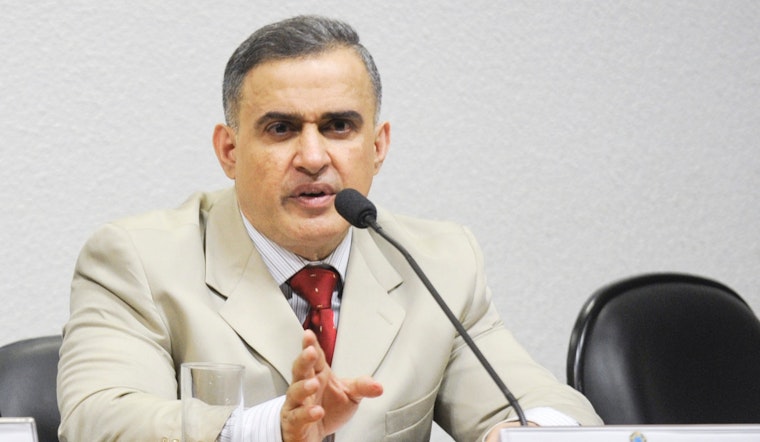
Tarek William Saab, Venezuela’s attorney general since 2017, handed in his resignation on Wednesday, abruptly walking away from the post and throwing fresh fuel on the post-Maduro scramble for control of the country’s justice institutions. Lawmakers in the National Assembly read his letter in a public session and said they would move to fill the vacancy while the prosecutor’s office operates without its longtime boss. His exit closes out a roughly nine-year tenure that critics have long linked to the politicization of prosecutions.
Assembly president Jorge Rodríguez announced the resignations of both Saab and the national ombudsman and confirmed there is currently no deputy attorney general who can automatically step in. Lawmakers plan to name an interim “person in charge” while a Nominations Committee screens permanent candidates, activating constitutional selection mechanisms and adding to the rapid rotation of key legal posts. Legislators said the Assembly will move quickly to set the process for both temporary and permanent replacements, according to the Miami Herald.
Post-Maduro shakeup
The resignations land in the middle of a sweeping political realignment that sped up after U.S. forces captured Nicolás Maduro on Jan. 3, 2026, an event that dramatically altered the balance of power in Caracas and sent ripples through ministries and state institutions. Vice President Delcy Rodríguez has taken on interim presidential duties, and allies in her inner circle have been moving to consolidate control over agencies that handle prosecutions and oversight. International reporting has described how Maduro’s capture and the resulting political vacuum reshuffled patronage networks inside the state, raising the stakes over who runs the prosecutor’s office next.
As reported by Al Jazeera.
Saab's record and the justice system
Saab was installed as attorney general in 2017 and ratified by the National Assembly in October 2024 for a term scheduled to run through 2031. Human-rights organisations and some foreign observers have long argued that under his leadership, the Public Ministry was used to pursue political opponents. A 2021 United Nations fact-finding mission documented patterns of judicial interference and concluded that elements of the justice system had at times been used as a tool of repression, helping explain why control of the prosecutor’s office is now so politically charged. As of Wednesday, Saab had not issued a public statement about his resignation.
Per the U.N. fact-finding mission.
Who stands to gain
Analysts and former officials say Saab’s departure could clear the way for a successor loyal to interim president Delcy Rodríguez, further consolidating the Rodríguez siblings’ influence over legal and regulatory levers. Regional coverage has highlighted potential interim names linked to the current power bloc, and observers warn that whoever is chosen will heavily shape how politically sensitive cases are handled. The next attorney general will be in a position to decide which prosecutions move forward, which are shelved and which are reframed under the new political terms.
As detailed by ANSA.
Amnesty law and legal stakes
The timing is no coincidence: the resignations land just as the National Assembly moves to implement a broad amnesty law signed on Feb. 19 that authorities say has already removed restrictions or led to releases for thousands of people. Government monitoring bodies report more than 3,000 full releases under the statute, while independent organisations such as Foro Penal say they have confirmed far fewer cases. That gap underlines how contested the post-capture transition remains. The next person to lead the Public Ministry will play a pivotal role in deciding which cases qualify for amnesty and how to handle petitions that human-rights monitors argue deserve closer scrutiny.
Reporting from Reuters/BDNews24.
For many Venezuelans watching closely, Saab’s exit looks like both an institutional reset and a test of whether the justice system will truly change or simply get a new face at the top. Miguel Ángel Martín, an analyst quoted in coverage of the resignations, said many in the country see Saab as part of the state’s repressive apparatus. The work of the Assembly’s Nominations Committee, along with the choice of a short-term interim figure, will set the tone in the coming weeks as judges and prosecutors navigate Venezuela’s abrupt political transition.
As reported by the Miami Herald.




