

























































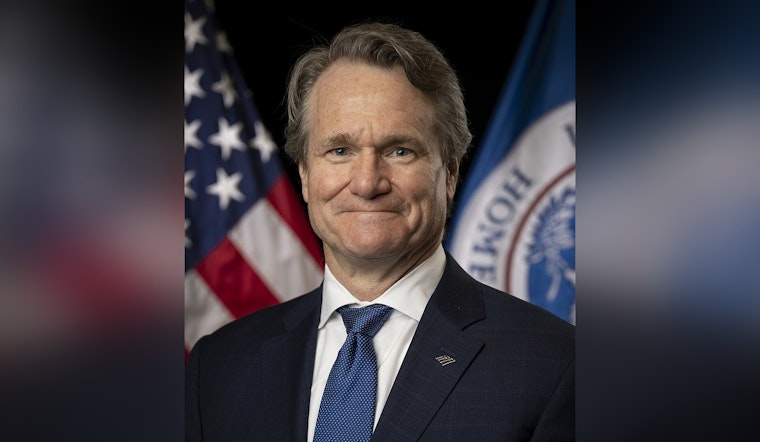
Even with groceries, rent, and other basics feeling pricier, Bank of America CEO Brian Moynihan says the bank’s customers are still swiping, tapping, and clicking away. That resilient spending, he told investors this week, is helping power Bank of America’s payments business and soften the blow in other parts of the bank’s results. At the same time, he highlighted a big internal pivot toward artificial intelligence to handle routine work, a shift the bank says is changing how many tech and back-office jobs get done. Put together, it paints a split-screen economy: plenty of everyday buying beyond the essentials, even as lower-income households feel more strain.
Those comments were reported by the Charlotte Business Journal, which noted that Moynihan spoke at a financial services conference where executives pointed to growth in payments. The outlet also reported that Bank of America is leaning on cost controls and technology upgrades to protect profit margins while juggling staffing needs.
Bank Data Show Spending Holding Up
Bank of America’s own numbers back up Moynihan’s read on consumer behavior. In its February “Consumer Checkpoint” report, the bank found that total card spending rose 2.6% year over year in January, which the firm said was the fastest pace in nearly two years. The research arm also warned that the headline strength masks widening gaps across income groups, a pattern it flagged as a potential “K-shaped” divergence in how different households are faring.
According to the Bank of America Institute, several forces are helping keep spending afloat. Customers are trading down to cheaper options, tapping elevated savings, and benefiting from higher tax refunds, all of which are helping prop up overall card activity even as affordability worries grow louder.
AI and Staffing: The Trade-offs
Moynihan has also been blunt that artificial intelligence is reshaping how the bank develops products and writes code. He told investors that Bank of America has about 18,000 people who code and that applying AI to that work “saves us about 2,000 people,” a remark he made on the bank’s Q4 2025 earnings call, according to AlphaStreet.
He has also described the bank’s digital tools, including its Erica virtual assistant, as delivering efficiency roughly equivalent to 11,000 full-time employees, according to reporting by Business Insider. In corporate-speak, that is a lot of work getting done by software rather than people.
Payments Business Gets a Push
Executives say payment volumes have become an increasingly important revenue stream as Bank of America builds out services for large corporate clients and leans into real-time payment rails. One example: the bank enabled clients to send payments up to a 10 million dollar cap over the RTP network, a change it says opened fresh use cases for bigger corporate transfers, according to a Bank of America update.
Separate reporting has noted broad growth in the bank’s payments products as businesses and consumers alike shift more activity into digital and real-time channels, per American Banker.
What It Means for Workers and Customers
Moynihan has repeatedly stressed that as the bank automates more work, the goal is to retrain and redeploy employees into new roles rather than rely on sweeping layoffs. Still, analysts and worker advocates caution that efficiency gains tend to reduce the need for some back-office positions over time. Bank of America has acknowledged that reality in investor conversations, and reporters have drawn attention to the potential long-term impact on staffing.
Those dynamics, and how they intersect with the bank’s AI push, are laid out in coverage by Business Insider and the detailed call notes published by AlphaStreet.
For Charlotte, which hosts Bank of America’s corporate center and a large chunk of its workforce, the combination of steady consumer spending and a growing payments franchise is a reminder that the bank’s fortunes still matter in a very local way. Moynihan’s basic message is that customers are keeping money in motion, and the bank is betting that smarter software will let it handle more of that activity with fewer routine tasks on humans’ plates in 2026.




